Why Does My Dog Stare at Me? Six Real Reasons
Dogs stare at people for at least six distinct reasons, from affection to anxiety to begging. How to read what your dog is communicating.
Why does my dog stare at me? The honest answer from a former licensed insurance agent who now writes pet-care guidance.
Quick answer: Dogs stare at people for six main reasons: the bonded gaze (mutual eye contact releases oxytocin), reading your cues, soliciting something they want, seeking direction, anxiety, and (rarely) aggression. The body language around the stare tells you which one is operating. Soft eyes with a relaxed body is positive; hard eyes with a tense body is a problem.
The popular answer is "they love you." That's true sometimes, partial truth other times, and not the answer at all in a few cases. Dogs stare at people for six distinct reasons, and the body language around the stare tells you which one is operating.
This is the working framework for reading the look.
1. The bonded gaze (oxytocin loop)
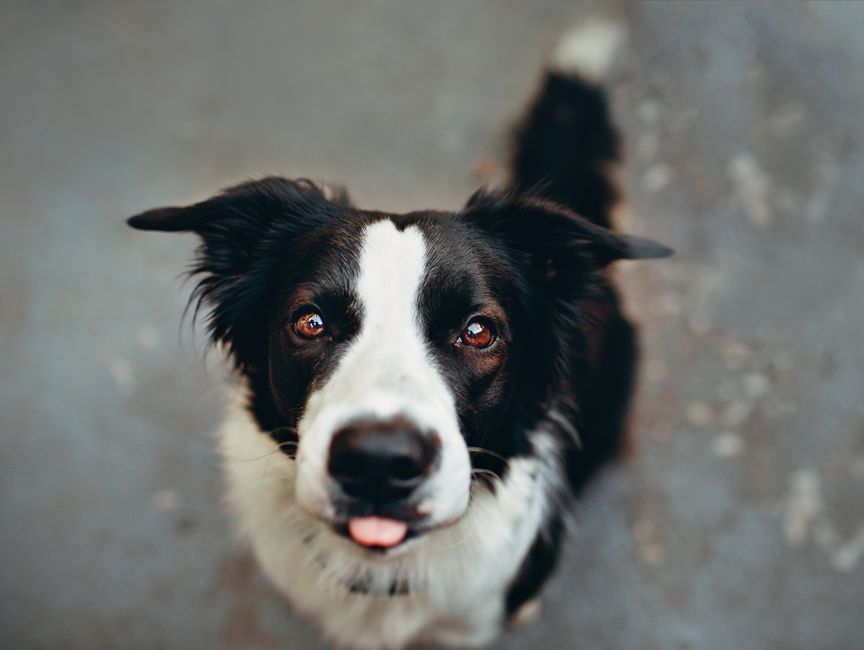
Dogs and humans have evolved a mutual gaze response that produces oxytocin in both parties. When your dog stares at you with soft, relaxed eyes, the act of holding the gaze releases oxytocin (the bonding hormone) in their brain and yours. It's a real biochemical event, not metaphorical.
This is one of the things that distinguishes dogs from wolves. Wolves typically don't engage in sustained eye contact with humans; it's threatening behavior in canid social systems. Dogs, through twenty thousand years of co-evolution, have learned to hold human gaze in a way that strengthens social bonds.
Recognizing the bonded gaze:
- Soft, relaxed eyes (not fixated, not hard).
- Relaxed body, slow tail wag, possibly sleeping or resting.
- Often happens during quiet moments together.
- The dog seems content and not seeking action.
- May include a soft head-tilt.
This is the answer most owners want, and it's accurate when the body language matches.
2. Reading you
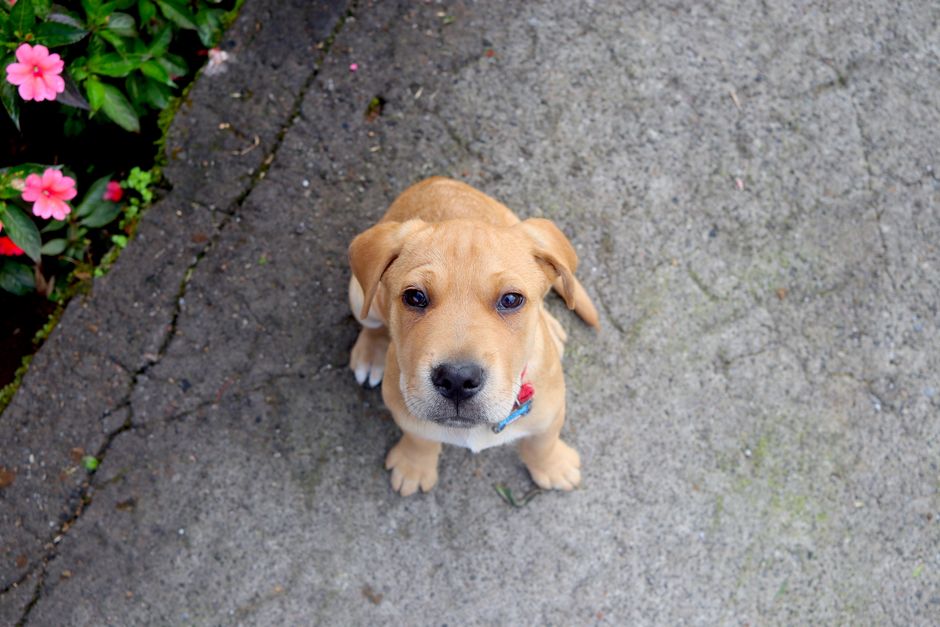
Dogs are remarkably skilled at reading human emotional states from facial expressions, body language, and even subtle behavioral cues. They watch you to gather information. When something is about to happen (you're getting up, picking up keys, opening the fridge), the dog has often already noticed.
Recognizing reading-stares:
- Tracking your movements with attention.
- Subtle shifts in body position based on what you do.
- Often happens around routine transition points (mealtime, walk time, bedtime).
- Stops when the routine completes or the question is answered.
- May include head tilts, ear adjustments.
Dogs use these cues to predict what you're about to do and adjust their behavior accordingly. The smart, alert dog is doing this constantly. It's part of why dogs are so good at appearing to read minds.
3. Soliciting
This is the demand stare. The dog wants something specific (food, attention, walk, door opened, the ball thrown) and is looking at you to communicate it.
Recognizing the solicitation stare:
- Direct, focused, often paired with body positioning.
- Often happens near an associated object: by the door, near the food bowl, holding a toy.
- May include subtle behaviors: sitting, lifting a paw, head tilts, soft whines.
- The dog will often glance between you and the desired object (the "look-look" pattern).
- Resolves when the request is granted.
Most household stares fall into this category. The dog has learned that staring at the human is more effective than vocalizing or physical demands.
The behavioral note: you can train this either way. If you respond to staring by giving the dog what they want, you're reinforcing it. Sometimes that's fine (the dog needs the door opened to go outside; they should ask). Sometimes it isn't (table-side staring during meals shouldn't be reinforced if you don't want it to continue).
4. Confusion or seeking direction

Dogs sometimes stare at humans because they're trying to understand the situation. New environments, ambiguous situations, mixed signals from the human, training tasks where the right answer isn't obvious. The dog looks to the human for clarification.
Recognizing the seeking-direction stare:
- Often happens during training or in new contexts.
- Body posture is alert but not solicitous.
- Eyes tracking, head tilts.
- The dog may move toward you or pause and wait.
- Resolves when context becomes clear.
This is one of the more endearing stares. The dog is essentially asking, "What now?"
5. Anxiety or discomfort

A particular kind of stare emerges when dogs are stressed or uncomfortable. Hard, fixed eyes. Tense body. Whale eye (whites of eyes visible). This is not affection or curiosity; it's the dog telling you they're not okay with what's happening.
Recognizing anxiety stares:
- Hard, fixed eyes (not soft).
- Visible whites of eyes (whale eye).
- Tense body, ears back, low tail.
- May happen during specific triggers: thunderstorms, vet visits, after a scolding, around unfamiliar people or dogs.
- Resolves when the stressor is removed or addressed.
This warrants attention. The dog is communicating distress. Forcing through the situation increases anxiety; addressing the trigger reduces it.
6. Aggression (rare in pet dogs but real)

A hard, sustained stare paired with stillness, raised hackles, or low growling is a serious warning. This is aggressive behavior. Most pet dogs don't direct this at their owners, but it can happen in specific situations: resource guarding (food, beds, toys), pain reactions, or breakdown of training boundaries.
Recognizing aggressive stares:
- Hard, fixed, unmoving gaze.
- Body very still, sometimes lowered or hunched.
- Hackles raised.
- May include lip-curling or low growling.
- Often happens around specific triggers (food bowl, favored toy, sleeping spot).
This is a serious signal. The right response is to back off, not to challenge. Make notes of what triggered it. Schedule a behavior consultation if the pattern recurs.
This is the rarest of the six categories in normal pet dogs but the most important to recognize correctly. Misreading aggression as something else can lead to bites.
How to tell the difference
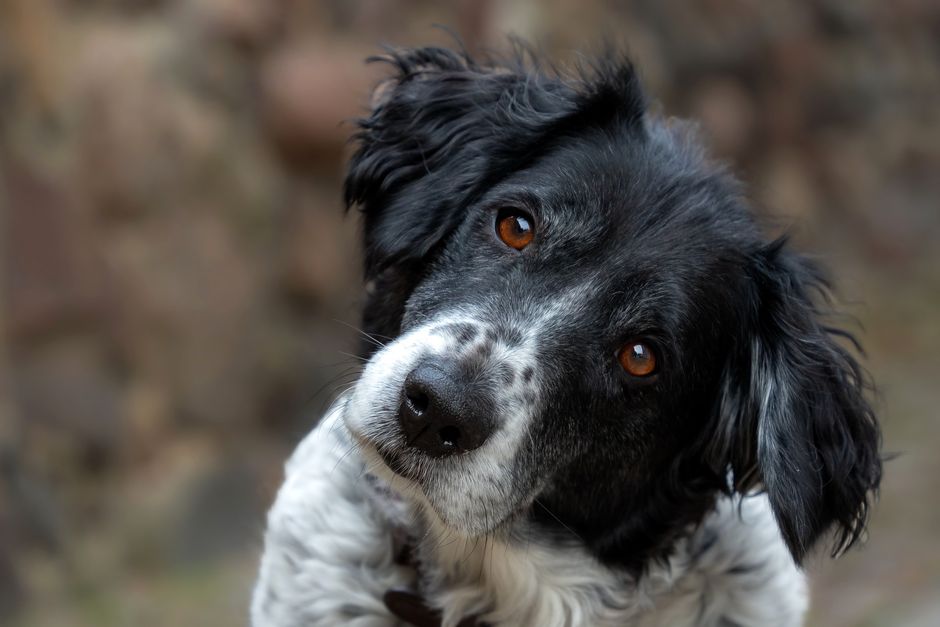
The body language around the stare is the diagnostic. Same eye contact can mean five different things depending on context.
Soft eyes, relaxed body: bonded gaze.
Tracking eyes, alert body: reading you.
Direct eyes, solicitation behaviors: requesting something.
Searching eyes, confused body: seeking direction.
Hard eyes, tense body, whale eye: anxiety.
Hard eyes, very still body, lowered posture, possible growl: aggression.
The pattern is consistent: soft eyes plus relaxed body equals positive interaction. Hard eyes plus tense body equals problem. Most stares fall into the soft-and-relaxed end.
What to do with the stare
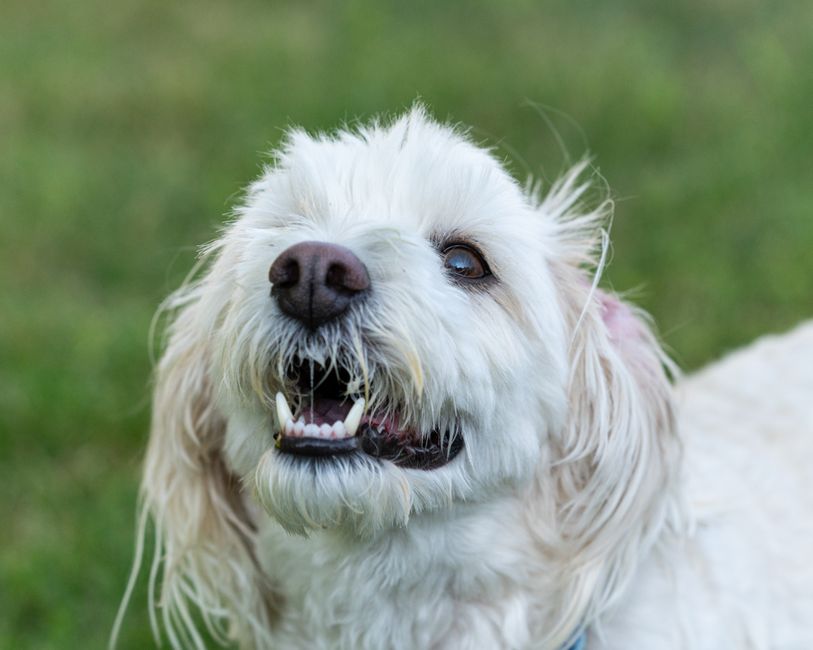
For most categories, no action needed. Receive the bonded gaze. Address the request when reasonable. Provide direction when the dog is seeking it. Read your own body language and ensure you're not creating confusion.
For anxiety stares: identify and reduce the trigger. The dog is asking for help.
For aggressive stares: don't escalate, don't punish, give the dog space, then plan an intervention with a professional if the pattern persists.
For excessive solicitation staring (the constant table-side begging): manage rather than punish. Don't feed from the table. Don't make eye contact during meals. Use a "place" cue if trained. The behavior fades when the reinforcement does.
Why dogs stare more than wolves
Brief evolutionary note: dogs have evolved facial muscles that wolves don't have, including the levator anguli oculi medialis (the muscle responsible for the inner-eyebrow raise that produces the "puppy dog eyes" expression). This is not a wolf trait. It evolved during domestication.
The same general pattern holds for staring. Dogs have evolved both the physical apparatus and the social behavior of holding human gaze in ways their ancestors didn't. The dog watching you across the room is engaging in a behavior that wolves wouldn't engage in toward humans.
Frequently Asked Questions
Why does my dog stare at me while I sleep?
Most overnight or early-morning staring is a mix of bonded gaze and soliciting. Your dog may be watching you for the first signs of waking, which often signals breakfast or a walk. Some dogs also rest near their person and watch out of comfort and attachment. If the body is relaxed and the eyes are soft, it is a normal, affectionate behavior.
Why does my dog stare at me and not listen?
A dog staring without responding to a cue is often confused rather than defiant. The dog may not understand what you are asking, or the cue may not be reliably trained yet. It can also be a sign the dog is overstimulated or distracted. Lower the difficulty, reward small steps, and check that the cue means the same thing every time.
Is it bad to stare back at my dog?
With your own bonded dog in a relaxed setting, returning a soft gaze is fine and can reinforce the connection through the shared oxytocin response. The exception is hard, direct staring at an unfamiliar, fearful, or tense dog, which canids can read as a threat. Read the body language first: soft and relaxed is safe to return, hard and tense is not.
Why does my dog stare at the wall or into space?
Brief, occasional staring at nothing is usually just a dog tracking a sound, smell, or shadow you cannot detect. Persistent, repetitive wall-staring is different and can occasionally point to a medical issue such as canine cognitive dysfunction in seniors or, rarely, a neurological problem. If it becomes frequent or compulsive, mention it to your vet.
Do dogs stare to show they love you?
Sometimes, yes. The soft, relaxed bonded gaze is genuinely tied to the oxytocin loop that strengthens the dog-human bond, so that look really can reflect affection. But the same posture of eye contact can also mean your dog wants something or is reading your next move. Affection is one real reason among several, not the only one.
Authoritative sources
- ASPCA: Canine Body Language and Common Behavior Issues
- Cornell University Riney Canine Health Center
The takeaway
Dogs stare for six reasons: bonded affection, reading you, soliciting, seeking direction, anxiety, and (rarely) aggression. The body language around the stare tells you which one. Soft eyes with relaxed body equals positive. Hard eyes with tense body equals problem.
Most stares from your own dog, in your own house, are some combination of bonded gaze, reading you, and soliciting. The solicitation ones are the most common, and they're the ones owners have the most influence over via reinforcement.
The dog watching you across the room is communicating. Reading what they're saying is most of what dog ownership is.
When staring is new in an older dog
One version of the stare is worth taking seriously: a senior dog who has started staring at walls, at corners, or blankly at you, especially in the evening. That is a textbook early sign of canine cognitive dysfunction, and it responds better to treatment the earlier it starts.
It is also the kind of slow, non-emergency condition an online vet handles well. Dutch puts your dog in front of a licensed vet over video, can prescribe and ship medication in most states, and includes unlimited follow-ups for $132 a year, which matters because cognitive treatment is a months-long adjustment, not a single visit. For a young dog with a soft, relaxed stare, none of this applies. That one is just love.