Why Does My Dog Lick Me So Much? Five Real Reasons
The five real reasons dogs lick people, ranked from affection to anxiety. When licking is normal, when it indicates a problem, and how to redirect.
Why does my dog lick me? The honest answer from a former licensed insurance agent who now writes pet-care guidance.
Quick answer: Dogs lick people for five main reasons: affection and bonding, taste (your skin carries salt and food residue), attention-seeking, anxiety or stress, and occasional health signals like nausea. Most licking is normal. The context, frequency, and your dog's body language tell you which reason is operating.
The popular answer is "kisses." That's true sometimes, partial truth other times, and entirely wrong in a few cases. Dogs lick people for at least five distinct reasons, and the meaning depends on context, frequency, and what else is happening with the dog at the time.
This is the working framework. Five real reasons your dog licks you, how to tell which one is operating, and when the licking is signaling something you should pay attention to.
1. Affection and bonding
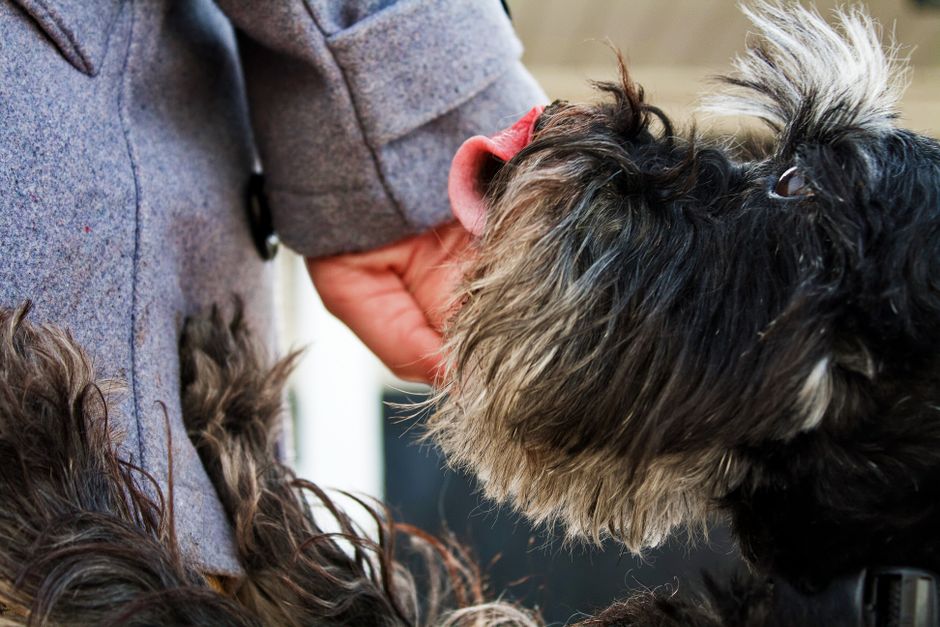
This is the answer most owners want, and it is genuinely accurate for a meaningful share of licking behavior.
Licking is a social behavior in canids. Wolf pups lick adult wolves' faces to signal submission and to solicit regurgitated food. Adult wolves lick each other to reinforce pack bonds. Modern dogs retain the same wiring, modified by twenty thousand years of human partnership. They lick people they are bonded to as a way of maintaining the social connection.
How to recognize affection licking:
- Calm, relaxed body language. Soft eyes, loose tail wag, no tension.
- Often happens during quiet moments: when you're sitting on the couch, after a long absence, during cuddles.
- Targeted at the face or hands.
- Stops when you redirect attention or stand up.
Affection licking is normal and not a behavioral concern. If you don't enjoy being licked, you can train alternative greetings (sit-and-look, paw-shake), but the behavior itself is not a problem to solve.
2. Taste
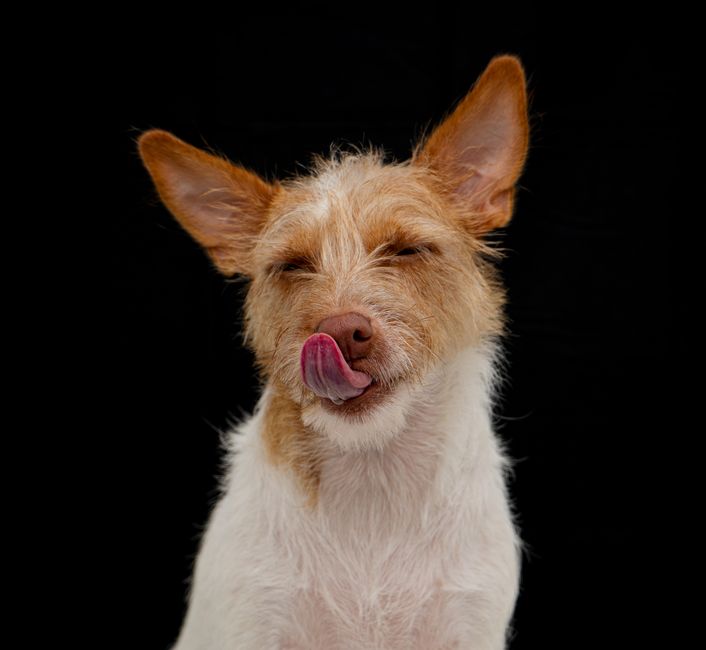
Dogs experience the world through smell and taste in a way humans don't fully appreciate. Human skin carries surprisingly interesting chemistry to a dog's tongue: salt from sweat, residual food particles, lotions, soaps, and the natural compounds the skin secretes. To a dog, your skin is an information-rich snack.
This is why dogs often lick more after exercise (more sweat), in summer (warmer, sweatier skin), or right after you've handled food. It's also why some dogs aggressively lick lotion off skin, much to the disapproval of the human applying it.
How to recognize taste-driven licking:
- The licking is concentrated on specific spots: arms after exercise, hands after cooking, legs after lotion.
- Stops when the perceived flavor is gone (or when the dog is satisfied).
- Not accompanied by anxiety signals.
This isn't a problem unless the dog is licking off something potentially harmful (some lotions and creams contain ingredients dogs shouldn't ingest). If you've just put on something potent, redirect the dog or wear sleeves until the product absorbs.
3. Attention seeking
Dogs are social, intelligent animals who learn quickly which behaviors get a response. If licking your face produces laughter, petting, or any kind of engagement, the dog has learned that licking summons attention. The licking gets reinforced and increases over time.
This is the most common form of licking that owners describe as "excessive." It's also the form that usually starts as affection and then becomes a habit because the human responses train it.
How to recognize attention-seeking licking:
- Tends to happen when the human's attention is elsewhere (on a phone, watching TV, talking to someone else).
- Persists past initial engagement, becoming more insistent.
- Stops when the dog gets what they want (engagement) and resumes when they lose it.
- May escalate to pawing or other behaviors if licking doesn't work.
The fix is straightforward: stop reinforcing it. When the dog licks for attention, calmly stand up and walk away or turn your body. Wait until the dog settles, then give attention. Within a few weeks of consistent response, the licking decreases substantially.
4. Anxiety or stress

Excessive, repetitive licking, particularly self-directed (paw licking, leg licking) but sometimes human-directed, can be a stress response. The repetitive motion releases endorphins, which produces a brief calming effect. Anxious dogs self-soothe through licking.
Triggers vary: separation anxiety, environmental changes, loud noises, new pets in the home, owner stress (yes, dogs sense it), or chronic underlying anxiety conditions.
How to recognize anxiety-driven licking:
- The licking is repetitive, almost trance-like.
- Often accompanied by other anxiety signals: pacing, panting without exercise, tail tucking, ears back.
- May be paired with self-licking (especially front paws) as a self-soothing behavior.
- Increases during stressful events: storms, fireworks, separation, schedule disruption.
- Hard to interrupt; the dog seems compelled rather than expressive.
This category warrants attention. Mild anxiety can be addressed with environmental enrichment, exercise, and structured training. Significant anxiety may need a behavior consult and, in some cases, anti-anxiety medication. Persistent paw licking, in particular, can lead to lick granulomas (chronic skin lesions from repeated licking that won't heal) and needs intervention.
5. Health-related signals
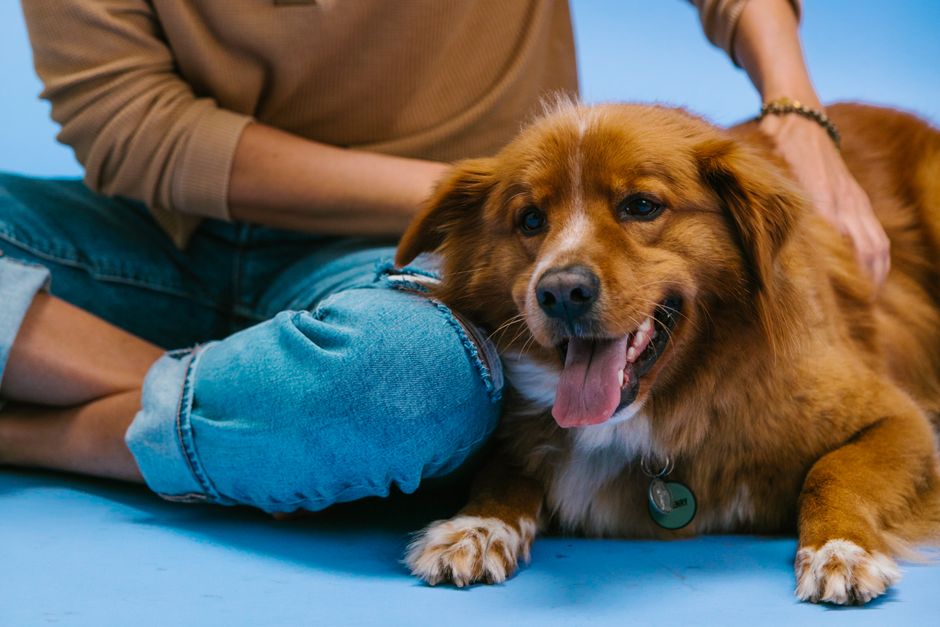
A few specific situations cause licking that traces back to a medical issue rather than behavior.
Nausea. Dogs often lick excessively (their lips, the air, surfaces, sometimes people) when they are nauseous. The licking is an autonomic response to the stomach upset. If your dog is licking unusually and seems off, watch for vomiting in the next few hours.
Pain. Dogs may lick the source of pain (a sore joint, an injured paw) or, less commonly, lick their owner more in a pain-driven seeking-comfort behavior.
Dental issues. Mouth pain or oral disease can cause increased licking and lip-smacking, sometimes redirected onto humans.
Cognitive dysfunction in seniors. Older dogs developing cognitive issues may show repetitive behaviors including increased licking.
How to recognize health-driven licking:
- Sudden change in licking pattern, especially in an older dog.
- Paired with other symptoms: lethargy, decreased appetite, drooling, head shaking.
- Doesn't respond to redirection.
- Started recently without behavioral cause.
Sudden licking pattern changes warrant a vet visit. Most are not serious, but the underlying cause is worth identifying.
How to tell which one is operating
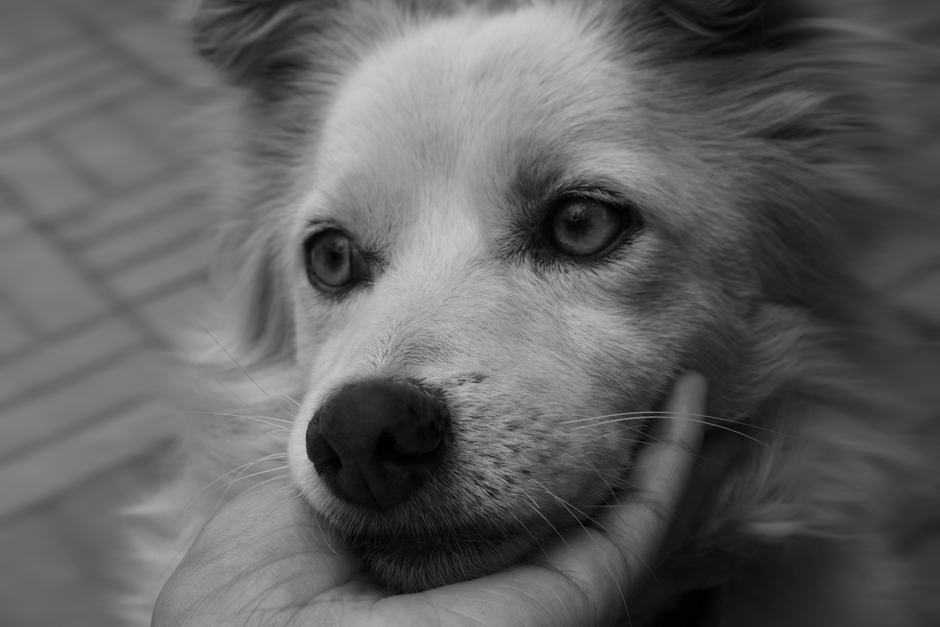
A useful diagnostic question: when does the licking happen?
- Quiet, calm moments, paired with relaxed body language: affection.
- Right after specific triggers (exercise, food, lotion): taste.
- When you're distracted or ignoring the dog: attention-seeking.
- Before, during, or after stressful events: anxiety.
- Sudden, unexplained, paired with other symptoms: health.
Most dogs lick for a mix of reasons. The same dog might lick the owner's face for affection in the morning, lick salty arms after a run in the afternoon, and demand-lick for attention in the evening.
What to do about excessive licking
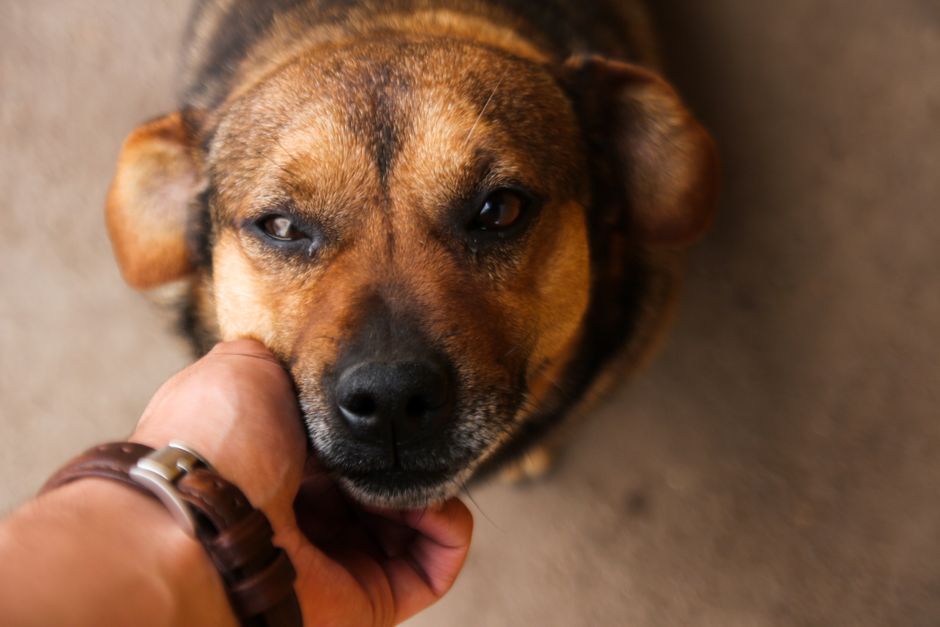
For affection or taste-driven licking, no intervention is needed unless the owner finds it unpleasant. In that case, train an alternative greeting and redirect calmly.
For attention-seeking licking, stop reinforcing it. Walk away when it starts. Give attention when the dog is calm and not licking.
For anxiety-driven licking, address the underlying anxiety. Increase exercise and mental stimulation. Provide a quiet space the dog can retreat to. For persistent issues, consult a certified behaviorist or your vet.
For health-related licking, see the vet.
Across all categories: do not punish licking. Punishment doesn't address the cause and can damage the human-dog relationship. The fix is environmental management and behavior redirection, not correction.
What about excessive self-licking
The same framework applies. Most self-licking falls into one of these categories: grooming (normal), boredom (under-stimulation), anxiety (most common cause of excessive paw licking), or medical (allergies, pain, parasites).
The threshold for vet attention with self-licking: hot spots, lick granulomas, persistent paw licking that has hair loss or skin changes, or any new pattern that emerges suddenly.
Frequently Asked Questions
Why does my dog lick me so much all of a sudden?
A sudden increase in licking usually points to a recent change rather than the baseline behavior. Look for new triggers: more sweat after exercise, a new lotion or soap, a stressful event, or a shift in routine. If the change is abrupt, paired with other symptoms like lethargy or drooling, and doesn't respond to redirection, treat it as a possible health signal and check with your vet.
Is it bad to let my dog lick my face?
For most healthy people and dogs it is low risk, but it is not zero risk. Dog saliva can carry bacteria, and the mouth and around the eyes are more sensitive entry points. People who are immunocompromised, pregnant, or very young should be more cautious. If you want to discourage it, redirect to an alternative greeting rather than punishing.
Why does my dog lick me and then bite gently?
Licking followed by soft mouthing is usually play or affection, especially in younger dogs who explore with their mouths. It can also be overstimulation, where the dog is getting too excited during the interaction. If the gentle biting escalates or happens when the dog seems tense, pause the interaction and give the dog a break.
How do I get my dog to stop licking me?
Identify which reason is driving it first. For attention-seeking licking, stop reinforcing it: calmly stand up or turn away when it starts, and give attention only when the dog is settled. For affection or taste licking, redirect to a trained alternative greeting. Never punish licking, since that does not address the cause and can harm the relationship.
Do dogs lick to show dominance?
No. The "dominance" framing is largely outdated for this behavior. Licking traces back to social and care-soliciting behavior in canids, not status assertion. Wolf pups lick adults to signal submission and solicit food, which is closer to the opposite of dominance. Read licking as social, sensory, or emotional rather than a power play.
Authoritative sources
The takeaway
Dogs lick people for five real reasons: affection, taste, attention-seeking, anxiety, and health-related signaling. The pattern, context, and accompanying body language tell you which is operating in any given moment.
Most licking is normal and harmless. The categories that warrant intervention are attention-seeking (which the human is reinforcing), anxiety (which is making the dog miserable), and health-related (which has an underlying cause).
The "kisses" answer your friend gave you is sometimes right and sometimes wrong. Watch the body language and the context, and you'll know which.
If the licking is the anxious or itchy kind
Two of the five reasons above are worth a vet's eyes rather than a behaviorist's: anxiety licking and health-related licking, especially a dog who licks its own paws or flanks raw. Both are the kind of recurring, non-emergency problem that in-person clinics handle badly, because you pay a full visit fee every time the plan needs adjusting.
Dutch is an online vet membership built for exactly that pattern: video visits with a vet licensed in your state, unlimited follow-ups, and allergy or anxiety prescriptions shipped to you in most states, for $132 a year. It is not for emergencies and it is not for a dog who needs hands-on work, but for "the licking is back again" it costs less than one clinic visit.