Why Do Cats Purr? The Real Science Behind the Sound
Cats purr for at least four distinct reasons. The neurology, the frequency-healing research, and what it means when a cat purrs at the vet's office.
The popular answer is that cats purr when they're happy. That's true sometimes and substantially incomplete. Cats also purr when they're injured, when they're nursing, when they're stressed, and when they're dying. The behavior is far more interesting than the contentment-only framing suggests.
Here's what the research actually shows about why cats purr, how they do it, and what it means in different contexts.
How a cat purrs (the mechanism)
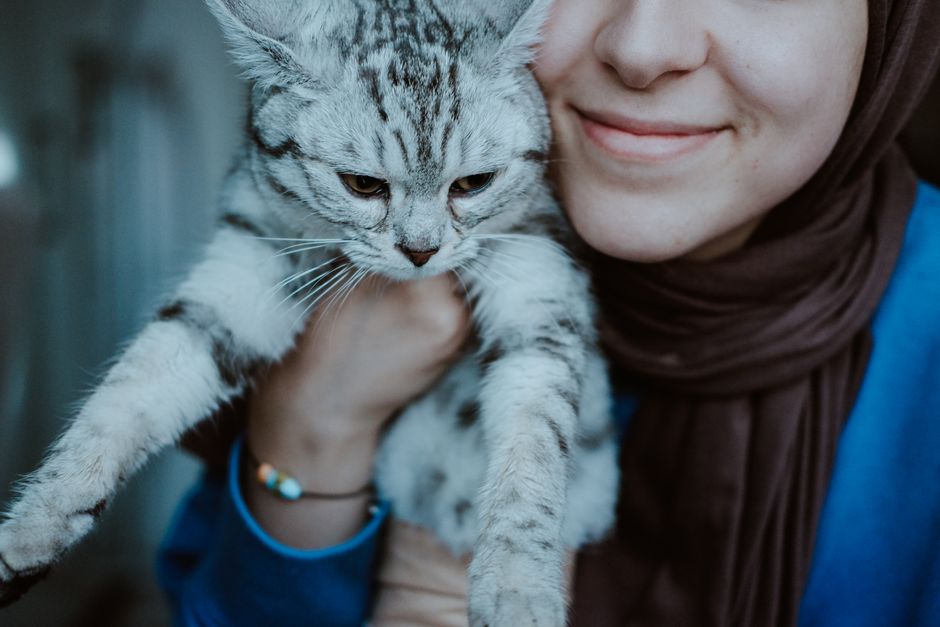
The mechanical answer: purring is produced by the rapid movement of muscles in the larynx. The muscles open and close the glottis (the space between vocal cords) rapidly during both inhale and exhale, creating the characteristic continuous sound.
The frequency is consistent across cats: 25 to 150 Hz, with most domestic cats purring around 25-50 Hz. This is meaningful because that frequency range happens to overlap with frequencies known to promote bone and tissue healing in mammals.
The neurology: the laryngeal muscles are controlled by a neural oscillator in the cat's brain that fires rhythmically. The cat doesn't consciously produce the purr in the way humans speak; it's more autonomic, like our breathing rhythm.
This explains why cats can purr while doing other things (eating, breathing normally, even drinking water). The purring system runs in parallel to the rest of motor control. The Cornell Feline Health Center is a useful non-commercial reference on feline communication and the range of meanings behind sounds like purring.
Reason 1: Contentment (the popular answer)

Yes, cats purr when content. Sitting on a warm lap, being petted, in a relaxed safe space. The contentment purr is real.
Recognizing it:
- Soft, steady purr at a consistent volume.
- Cat is in a relaxed posture (loafing, curled up, kneading, rolled over).
- Eyes half-closed or fully closed.
- Tail relaxed, not flicking.
- The cat sought out the situation rather than being placed in it.
This accounts for a meaningful share of purring but not all of it.
Reason 2: Self-soothing and stress
Cats also purr in stressful situations. Cats at the vet's office, cats being transported in carriers, cats during conflict with other cats. The purring functions as a self-calming behavior, similar to how humans hum when nervous or rock in stressful situations.
The same frequency that produces content purring is also therapeutically calming to the cat producing it. The behavior is essentially self-administered comfort.
Recognizing it:
- Purr in a stressful or unfamiliar context.
- Cat may show other stress signs: dilated pupils, ears back, tense body, tail tucked or twitching.
- Often paired with hiding or freezing rather than seeking contact.
- The cat would likely leave the situation if able.
This is why a cat at the vet's office often purrs throughout the exam. Owners sometimes interpret this as the cat being okay with the visit; in reality, the cat is using purring to manage the stress of the situation.
Reason 3: Healing and pain management
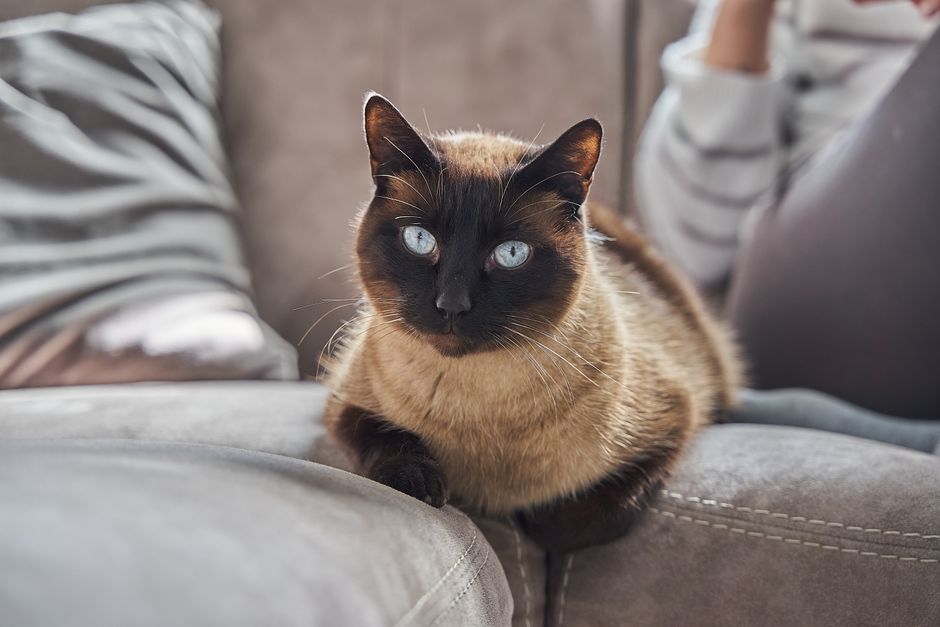
This is where the research gets interesting. The frequency range cats purr at (25-150 Hz, particularly the 25-50 Hz central range) corresponds to frequencies that have been shown in research to:
- Promote bone density and healing of fractures.
- Accelerate soft tissue and tendon repair.
- Reduce inflammation.
- Reduce pain perception.
This was discovered when researchers noticed that cats are remarkably resistant to certain orthopedic conditions and recover from injuries faster than expected for their size. Investigation revealed the purring frequency as a likely contributor.
The hypothesis: cats evolved purring not just as social communication but as a self-medication mechanism. A cat who purrs while resting accelerates their own healing.
This explains the seemingly paradoxical observation that cats purr when injured. They're not "fine"; they're using the only physiological tool they have to support recovery. The purring during illness or after injury is therapeutic.
Recognizing it:
- Purring during recovery from injury or surgery.
- Purring while sick or in obvious discomfort.
- Often paired with extended rest in a quiet location.
The "purring while injured" pattern was historically misread as cats hiding their distress. In light of the frequency research, it's better understood as cats actively self-treating.
Reason 4: Communication and food solicitation

Cats produce a specific variant of purring, the "solicitation purr," that includes a higher-frequency component (closer to 220-520 Hz) embedded in the lower-frequency purr. This sound activates a similar neural response in humans as a baby's cry.
In other words, cats have learned (or evolved) to modify their purr in ways that exploit human caregiving instincts. The solicitation purr is what cats use when they want food, attention, or to be let outside.
This is one of the more remarkable findings about cat-human coevolution. Cats have, over thousands of years of domestic life, developed a vocal mechanism that specifically targets human attention.
Recognizing it:
- Purr that sounds slightly higher-pitched or more "urgent" than the contentment purr.
- Often happens around feeding time or when the cat wants something.
- May be paired with circling, leg-rubbing, or vocal cues.
- The cat is actively engaged with the human, not just relaxing.
If your cat sounds different when asking for breakfast than when sitting on your lap in the evening, you're hearing the difference between solicitation purring and contentment purring.
Other times cats purr
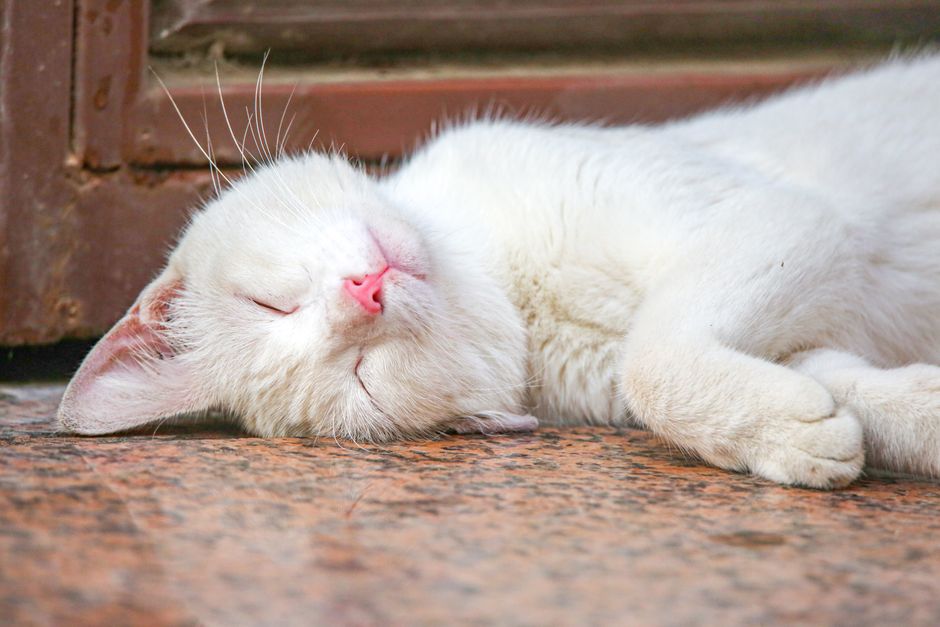
Beyond the four main reasons, cats also purr in a few specific contexts:
Nursing. Mother cats purr while nursing kittens. Kittens purr while nursing. The shared purring is thought to facilitate bonding and provide reassurance to the kittens that the mother is present (kittens are born blind and deaf; they identify the mother through the vibration of her purr).
Approaching death. Some cats purr in their final hours. This is consistent with the self-soothing and pain-management functions of purring.
Bonding with humans. Cats may purr more around specific people they're bonded to, even outside of contentment contexts. The purring functions as relationship maintenance.
Greeting. Some cats produce a brief, almost chirpy purr when greeting familiar humans or other cats. Social acknowledgment.
Why some cats purr more than others
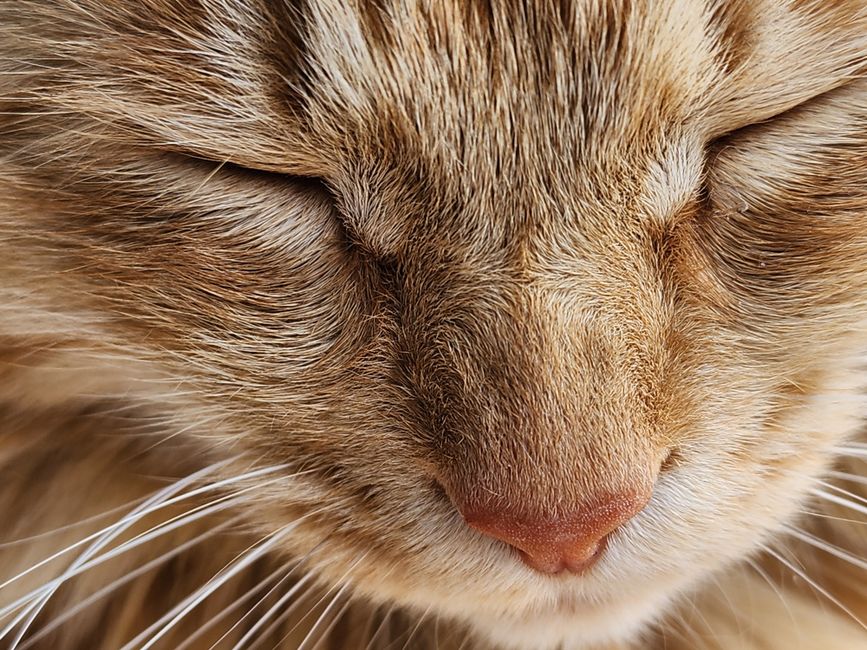
Considerable individual variation exists. Some cats purr almost constantly when interacting with humans. Some cats rarely audibly purr at all (though they may still purr at frequencies inaudible to humans, particularly at lower end of the range).
Factors affecting purring frequency:
- Breed. Some breeds (Maine Coons, Burmese, Russian Blues) tend to purr more vocally. Some (certain Asian breeds, some shorthaired domestics) purr more quietly.
- Individual personality. Same as humans varying in expressiveness.
- Age. Older cats sometimes purr more, both for self-soothing and because contentment behaviors increase as activity decreases.
- Bonding. Cats deeply bonded to specific humans tend to purr more around them.
If your cat doesn't purr much, it's likely individual variation, not a sign of unhappiness.
Can cats purr too much?

Generally no, but there's one consideration: persistent loud purring in a cat showing other signs of illness can mask the diagnostic process. Vets sometimes have to wait for purring to stop to listen to heart and lungs properly. If your cat is the type who purrs constantly during exams, the vet may need extra time or specific techniques to assess respiratory and cardiac function.
This isn't a problem to solve; just something the vet works around.
What about big cats?
Most big cats (lions, tigers, leopards, jaguars) don't purr in the way domestic cats do. They make a similar continuous sound called a "rumble" but it's mechanically different and only occurs during exhalation.
Cheetahs, ocelots, and a few other smaller wild cats do produce true purrs similar to domestic cats. The dividing line correlates with the structure of the laryngeal apparatus.
The cats most closely related to domestic cats (small wildcats) all purr.
Frequently Asked Questions
Why do cats purr?
Cats purr for at least four distinct reasons: contentment, self-soothing under stress, healing and pain management, and communication such as food solicitation. The same sound serves multiple functions, so context and body language determine what a given purr means. The popular "cats only purr when happy" idea is incomplete.
How do cats make the purring sound?
Purring is produced by rapid movement of the laryngeal muscles, which open and close the glottis during both inhaling and exhaling to create a continuous sound. A neural oscillator in the cat's brain fires rhythmically to drive it, which is why purring is largely automatic and can happen while the cat eats, breathes, or drinks.
Does a purring cat always mean a happy cat?
No. Cats also purr when stressed, frightened, injured, ill, or even near death, using the purr to self-soothe and support healing. A cat purring at the vet is often managing anxiety, not signaling that it is fine. Read the purr alongside posture, pupils, ears, and tail to know which function is at work.
Can purring actually help cats heal?
Research suggests it may. Cats purr in the 25 to 150 Hz range, with a 25 to 50 Hz core that overlaps frequencies shown to promote bone density, soft-tissue repair, and reduced inflammation and pain. This has led to the hypothesis that purring evolved partly as a self-medication mechanism, which would explain why cats often purr while injured or recovering.
Why does my cat purr when it wants food?
Cats can produce a "solicitation purr" that embeds a higher-frequency component, around 220 to 520 Hz, into the normal low purr. That sound taps into the same human response as a baby's cry, making it hard to ignore. Cats use it to request food, attention, or access, and the ASPCA covers similar learned cat-to-human communication behaviors.
The takeaway
Cats purr for at least four distinct reasons: contentment, self-soothing under stress, healing and pain management, and communication (especially food solicitation). The same sound serves multiple functions, and context determines meaning.
The contentment-only framing is incomplete. The cat purring at the vet isn't necessarily fine. The cat purring after surgery is using a real physiological tool to support recovery. The cat asking for breakfast is exploiting your evolved response to baby cries.
Watch the body language alongside the purring, and you'll know which one is operating at any given moment.