The Pet Microbiome: Why Stool Quality Matters More Than You Think
Stool quality is the cheapest health diagnostic available to pet owners. What to look for, what it tells you about gut health, and how to read it.
Quick answer: Stool quality is the cheapest daily health check you have for a dog or cat. Healthy stool is firm and holds its shape (a 3 to 4 on the standard 1-to-7 scale), brown, passed one to three times a day, proportionate in volume, and free of mucus, blood, or undigested food. Persistent deviation in consistency, color, volume, mucus, or undigested food is your pet's microbiome signaling that something is changing.
Veterinary medicine is increasingly oriented around the microbiome: the trillions of bacteria, fungi, and other organisms that live in a pet's digestive tract. The composition and health of that microbial community influences digestion, immune function, skin and coat health, weight, behavior, and disease susceptibility. It is one of the most important emerging areas of small animal medicine.
You cannot see the microbiome directly. But you can see its output, every day, in the yard. Stool quality is the cheapest, most informative ongoing diagnostic available to a pet owner. Once you know what to look for, you can catch developing issues weeks before they become medical problems, and you can tell at a glance whether a diet change is working or failing.
This is the practical guide to reading what the stool is telling you.
The five dimensions of stool quality

Stool tells you about microbiome health, food digestion, transit time, and several conditions that affect any of these. The variables to watch:
1. Consistency
The most diagnostic single feature. Use a 1-7 scale most veterinary professionals reference:
- 1: Hard, dry, separate pellets. Severe constipation. Dehydration or low fiber.
- 2: Sausage-shaped but lumpy. Mild constipation or low water intake.
- 3: Sausage-shaped with cracks on the surface. Slightly firm; acceptable.
- 4: Sausage-shaped, smooth, soft. Ideal. Holds shape, easy to pick up.
- 5: Soft blobs with clear edges. Slightly soft, may indicate mild GI upset or dietary issue.
- 6: Mushy, no defined shape. Diarrhea. Indicates active GI distress or significant dietary problem.
- 7: Watery, no solid components. Severe diarrhea. Medical attention needed if persistent.
Healthy adult dogs and cats should be in the 3-4 range consistently. Occasional drift to 5 is normal during dietary transitions or after stress. Persistent 5-6 or any 7 warrants attention.
2. Color
Normal stool is brown, with some shade variation based on diet. Specific colors that are concerning:
- Black or tarry. Digested blood from the upper GI tract. Vet visit, sometimes urgent.
- Bright red or with visible blood. Bleeding from the lower GI tract. Vet visit.
- Pale or grey. Possible liver or pancreatic issue. Vet visit.
- Yellow or orange. Bile imbalance, possibly food moving too quickly through. May resolve, may not.
- Green. Often dietary (eating grass) or sometimes bile-related. Usually transient.
- White spots in stool. Possible parasites (tapeworm segments are classic; they look like grains of rice). Vet visit.
- White stool. Bone-heavy raw diet (normal for raw-fed dogs) or, in non-raw-fed pets, possible biliary issue.
Diet can shift normal color slightly. Major color changes that persist more than a couple of stools warrant attention.
3. Volume and frequency
The total stool volume and frequency tells you about digestion efficiency.
Healthy norms:
- Adult dogs: 1 to 3 bowel movements per day. Volume scales with food volume.
- Adult cats: 1 to 2 bowel movements per day. Smaller volume than dogs.
What different patterns mean:
- Increased frequency (more than usual) can indicate dietary intolerance, parasite, or GI upset.
- Decreased frequency may indicate dehydration, decreased food intake, or possible obstruction.
- Larger volume than diet would suggest indicates poor digestion. The food is moving through without being absorbed efficiently.
- Smaller volume than expected can indicate efficient digestion (raw and fresh-cooked diets often produce noticeably smaller stools because more is being absorbed) or, less commonly, decreased intake.
A dog on a high-quality diet typically produces less stool by volume than the same dog on a lower-quality, filler-heavy diet. The bag's portion size may not change, but more of it is being used.
4. Mucus
Visible mucus on or in stool indicates inflammation in the colon. A small amount occasionally is normal. Consistent visible mucus is a sign of:
- Stress-induced colitis
- Food intolerance
- Inflammatory bowel disease
- Parasitic infection
- Bacterial infection
If you see clear or yellowish mucus on stool consistently for more than a few days, vet evaluation is appropriate.
5. Undigested food
Visible undigested food in stool indicates either:
- The food is too fibrous or difficult to digest.
- The dog/cat is eating too fast.
- Transit time is too short for adequate digestion.
- There is an underlying digestive issue (pancreatic insufficiency, malabsorption).
Occasional undigested vegetables in dog stool is normal; many vegetables are not fully broken down by canine digestion. Persistent visible undigested protein or large amounts of undigested kibble suggests a problem.
What healthy looks like
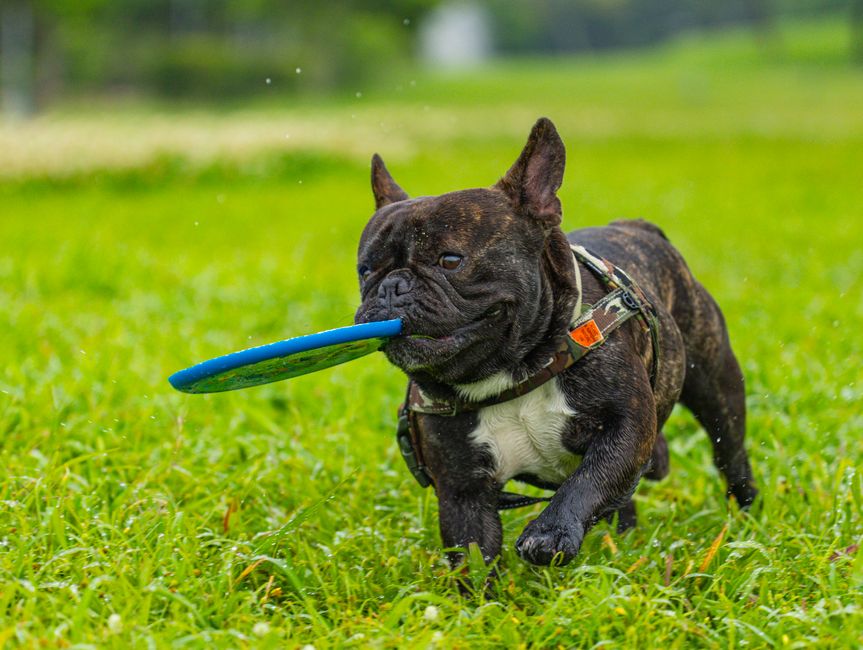
For a typical adult dog or cat in good health on an appropriate diet:
- Type 3-4 consistency. Holds shape, easy to pick up, no smearing.
- Brown color, with normal variation.
- 1 to 3 movements per day for dogs, 1 to 2 for cats.
- Volume proportionate to food intake.
- No visible mucus, blood, or undigested food.
- Mild odor (stool smells; that is normal). Strongly foul or unusual odors are a signal.
This is the baseline. Any consistent deviation from it is your microbiome telling you something is changing.
What different problems look like
Pattern recognition examples for common issues:
Food intolerance: chronic type 5-6 stools, sometimes with mucus, often with gas, normal volume, normal frequency. Resolves on switching to a different food and returns when the old food is reintroduced.
Food allergy: similar to intolerance but often accompanied by skin issues, ear infections, or chronic itching. The skin and gut are connected; allergy presents in both.
Parasitic infection: type 5-7 stools intermittently, sometimes with visible parasites or eggs (usually invisible without microscopy), increased frequency, possible weight loss, possible visible blood or mucus.
Pancreatic insufficiency: bulky pale stools with high fat content (steatorrhea), increased volume, increased frequency, weight loss despite normal appetite. More common in certain breeds (German Shepherds prominently).
Inflammatory bowel disease (IBD): chronic intermittent type 5-6 stools, mucus, sometimes blood, weight loss over time, sometimes vomiting. Common in cats, increasingly recognized in dogs.
Stress colitis: sudden type 5-6 stool, often with mucus or small amounts of blood, after a stressful event (boarding, new home, travel). Usually resolves on its own with bland diet support.
Constipation: type 1-2 stool, decreased frequency, straining without producing much. Often dietary (low water, low fiber) or, in cats, related to litter box or environmental issues.
Acute GI upset: sudden type 6-7, often with vomiting, may resolve in 24-48 hours. If persistent or severe, vet visit.
How to track
Keep a simple log for any pet with intermittent issues. Date, type score, volume estimate, color, any unusual features. A month of this data is more useful for the vet than a verbal description.
There are pet-specific apps for this, or just a notes file works. The discipline matters more than the medium.
What changes stool

The interventions that affect stool quality, in rough order of impact:
1. Diet quality. The single biggest lever. Higher-quality food typically produces firmer, smaller, less odorous stool. The shift from a cheap kibble to a quality diet often produces visible stool improvements within 2 to 3 weeks.
2. Probiotic supplementation. Effective for many cases of intermittent loose stool. Not all probiotics are equal; canine and feline-specific products with research backing (Purina FortiFlora, VSL#3, Proviable) work better than generic human probiotics.
3. Fiber adjustment. Adding moderate fiber (canned pumpkin, psyllium, or fiber-included formulas) helps both constipation and certain cases of diarrhea. The same intervention helps both, which is counterintuitive but works because fiber normalizes transit time and stool consistency.
4. Hydration. Especially in cats, water intake substantially affects stool consistency. Wet food, water fountains, and multiple bowls all help.
5. Diet change strategy. Abrupt diet changes produce bad stool. Slow transitions produce stable stool. The pace of change is sometimes the actual problem rather than the new food itself.
6. Stress reduction. Stress colitis is real and common, particularly in dogs. Reducing environmental stressors stabilizes stool quality.
Diet quality and stool quality
The relationship between food and stool deserves a separate note.
Cheap kibble produces large-volume, often soft, often odorous stool because much of what is in the bag is filler that the dog cannot fully digest. The body extracts what it can and passes the rest, in significant quantity.
Quality kibble produces smaller, firmer, less odorous stool. The food has higher digestibility, so less is wasted.
Fresh-cooked diets often produce smaller stools still, with cleaner consistency. Many owners notice their dog has half the previous stool volume after switching.
Raw diets produce the smallest, firmest, and least odorous stool of the major categories. Raw-fed dogs sometimes produce stool only every other day or every third day, with very small volume each time. This is normal for raw feeding and reflects high diet digestibility, not constipation. Complete commercial raw diets show this pattern reliably across users.
The exception: bone-heavy raw diets can produce white, crumbly stool that is too dry. This indicates the bone-to-meat ratio is too high. Adjust the formulation.
If you switch foods and your dog or cat's stool meaningfully improves on the new food, that is a real signal. If you switch and stool gets worse, that is also a signal.
When to see the vet
Most stool issues resolve with home interventions. The thresholds for veterinary care:
- Watery stool (type 7) for more than 24 hours.
- Blood in stool, beyond a small streak from straining.
- Black tarry stool, ever.
- Loss of appetite alongside stool changes.
- Lethargy, vomiting, or other systemic signs alongside GI changes.
- Persistent type 5-6 stool that does not respond to simple diet changes after 7-10 days.
- Significant weight loss over the same period.
- Visible parasites in stool.
- Stool changes in a very young or very old pet.
These are the situations where home approaches stop being adequate and professional evaluation is warranted. For a second reference on diarrhea and gut health, the American Veterinary Medical Association's pet care resources and the Cornell Riney Canine Health Center cover when digestive changes warrant a vet.
Frequently Asked Questions
What does healthy dog or cat poop look like?
Healthy stool is firm but not hard, holds its shape, and is easy to pick up without smearing, which is a 3 to 4 on the standard 1-to-7 consistency scale. It is brown with mild natural variation, passed one to three times a day for dogs and one to two for cats, and free of visible mucus, blood, or undigested food. A mild odor is normal.
What does the color of my pet's stool mean?
Brown is normal. Black or tarry stool suggests digested blood from the upper GI tract and needs a vet, sometimes urgently. Bright red or visible blood points to lower GI bleeding. Pale or grey can indicate a liver or pancreatic issue. Green is often just diet, such as eating grass, and usually passes. Major color changes that persist more than a couple of stools warrant attention.
How long can a dog or cat have diarrhea before seeing a vet?
Watery stool that lasts more than 24 hours warrants a vet visit, and so does any diarrhea paired with blood, black tarry stool, loss of appetite, lethargy, or vomiting. Mild loose stool from a diet change or stress often resolves on its own within a day or two with bland-diet support, but persistent type 5 to 6 stool that does not improve within 7 to 10 days should be evaluated.
Will a probiotic improve my pet's stool quality?
Often, for intermittent loose stool. Pet-specific probiotics with research backing tend to work better than generic human products. Probiotics are most effective alongside the bigger levers: a higher-quality, highly digestible diet, adequate hydration, appropriate fiber, and slow diet transitions. If stool problems are persistent or severe, treat the probiotic as a support, not a substitute for veterinary evaluation.
Why does my pet poop less on a raw or fresh diet?
Smaller, less frequent stool on a raw or fresh-cooked diet usually reflects high digestibility, not constipation. More of the food is absorbed and less is passed as waste, so some raw-fed dogs go only every other day with small volume. The exception is white, crumbly, overly dry stool, which signals too much bone in the ratio and means the formulation needs adjusting.
The takeaway
Stool quality is the most underused diagnostic tool in pet ownership. It costs nothing, requires no specialized equipment, and provides daily feedback on the health of the digestive tract and microbiome. A pet owner who pays attention to stool consistency, color, and volume will catch developing problems weeks before they become serious.
Look at it. Track it. The microbiome is telling you something every day. Your job is to be paying enough attention to hear what it is saying.