Indoor Cat Boredom and Obesity: Five $5 Fixes That Actually Work
Indoor cats get fat from food and from boredom. Five cheap interventions that move the needle on both, with the science behind why they actually work.
Quick answer: The five cheapest fixes that genuinely work for an overweight, bored indoor cat are a puzzle feeder, multiple small meals per day, a food-hidden treasure hunt, ten minutes of daily wand-toy play, and added vertical territory. Each costs about $5 or less, and run together they target both the calorie problem and the boredom that drives overeating.
A cat that lives indoors and gets the recommended portion of food on the bag will, in most cases, become overweight. The food calculations on cat food bags are calibrated for the active, lean cat that the food industry imagines. The actual cat in your living room walks twenty steps a day, sleeps for sixteen hours, and burns less than the bag assumes.
The result: roughly 60 percent of indoor cats in the United States are overweight or obese. The associated health costs (diabetes, joint issues, urinary tract issues, shorter lifespan) are substantial. But the fixes are not. Here are five interventions that genuinely work, each costing $5 or less, with the underlying reasons they work.
Why indoor cats get fat
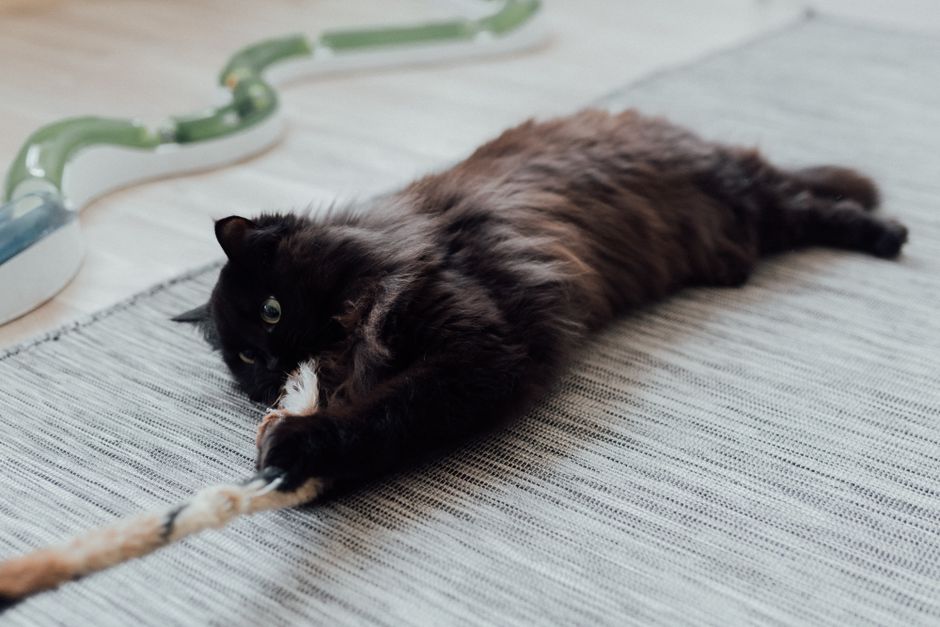
Two things drive indoor cat obesity simultaneously, and most owners only address one.
The caloric problem. Cat food portions on the bag assume an active cat. Indoor cats are not active. The result: 15 to 25 percent more calories than they need.
The behavioral problem. Cats are predators. Their natural feeding pattern involves stalking, pursuing, and capturing small prey multiple times a day, with successful kills concentrated to roughly 50 calories each. The whole pursuit cycle is built into their brain chemistry. Indoor cats get neither the pursuit nor the small-meal pattern. Food appears in a bowl twice a day. The unmet hunting drive becomes anxiety, restlessness, attention-seeking, and eating-out-of-boredom.
The two interventions that actually move the needle address both at once: serve fewer calories AND make the cat work for them. The fixes below all do some version of this.
Fix 1: A puzzle feeder ($3 to $8)

The single most effective intervention. A puzzle feeder is a container that releases food slowly as the cat manipulates it, turning a 30-second meal into a 10-to-20-minute activity.
What to buy: the simplest options work as well as the expensive ones. A repurposed plastic ball with food-sized holes punched in it costs under $3. The Petsafe Funkitty or Slimcat ball, available at most pet stores, runs about $8. Either is fine.
How it works:
- Cat must bat, roll, and chase the feeder to release food
- Eating becomes physically active rather than passive
- Meal duration extends from 30 seconds to 15 minutes
- Mental engagement increases, reducing post-meal restlessness
Effect on calories: indirect, but real. Cats who work for food often become satisfied with less, because the eating experience is more substantial.
Effect on boredom: substantial. The puzzle feeder is one of the few interventions that hits both metabolic and psychological dimensions of indoor cat life.
The catch: start gradually. Some cats refuse to use puzzle feeders if introduced abruptly. Begin with the puzzle feeder containing high-value food (a small portion of wet food or favorite treats) for a few days while the cat learns it produces good outcomes.
Fix 2: Multiple small meals per day ($0)
This is free but requires owner participation.
What to do: divide the daily food allotment into 4 to 6 small meals instead of 1 or 2 large ones. A cat eating 1 cup of food per day gets 1/4 cup four times instead of 1/2 cup twice.
Why it works:
- Matches the natural cat feeding pattern (multiple small "kills" per day) more closely.
- Reduces the post-meal blood sugar spike that drives subsequent hunger.
- Spreads metabolic activity across the day.
- Eliminates the long pre-meal fasting periods that drive begging behavior.
- Gives the owner more touchpoints with the cat, which serves the social need.
Practical implementation:
- A timer-controlled automatic feeder ($30 to $60, more than $5 but excellent ROI) makes this possible without owner schedule contortions.
- Without an auto-feeder, schedule three meals when you are home (morning, midday if possible, evening, before bed).
- Treats throughout the day count toward the daily total. Reduce meal portions to compensate.
Effect: measurable weight loss in many cats over 8 to 12 weeks. The cat is eating the same total amount but in a pattern the body handles more efficiently.
Fix 3: A food-hidden treasure hunt ($0)

This one is so simple it sounds insufficient. It is not.
What to do: hide small portions of the daily food allotment around the house in different places. The cat finds and eats them throughout the day.
Why it works:
- Activates the search behavior that hunting normally provides.
- Adds physical movement (the cat is actively walking through the house searching).
- Distributes the day's calories naturally throughout time.
- Engages cognitive function. Cats remember where food was hidden and check those spots.
Practical implementation:
- Start with 3 to 5 hiding spots. Increase as the cat catches on.
- Vary the spots so the cat does not just check the same few places.
- Use both wet and dry food if your cat eats both, in appropriate small portions.
- Be aware of attractants for ants and other pests; do not leave wet food hidden for long periods.
Effect: cats who participate in hunt-feeding show measurable improvements in activity levels, reduced begging behavior, and slow weight loss when total calories are also moderated.
This works well combined with Fix 2: multiple small hidden meals throughout the day mimics the natural feeding pattern more closely than any other intervention.
Fix 4: A wand toy and 10 minutes of play ($3 to $5)
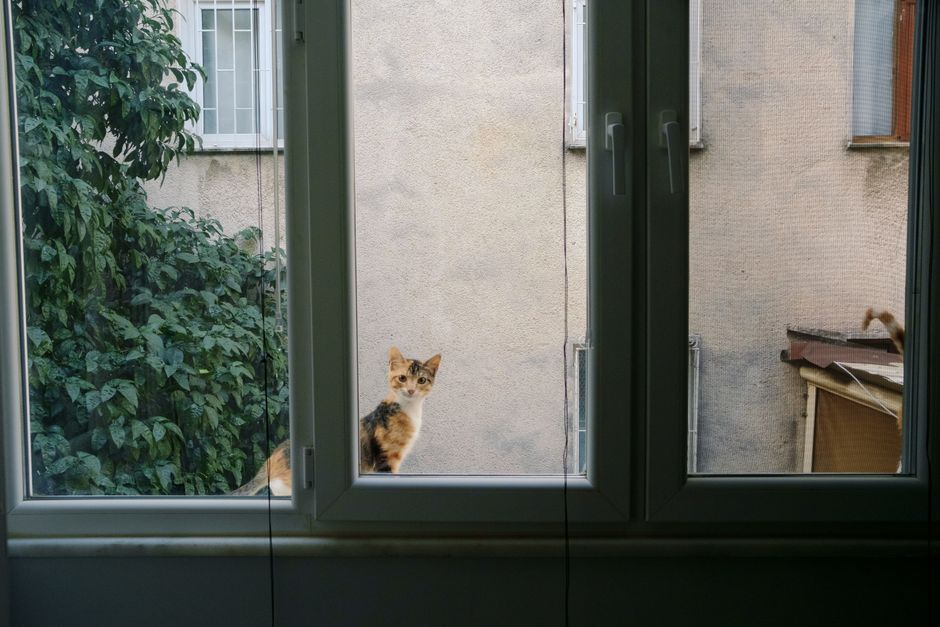
Most owners think they play with their cat. Most owners are wrong about how often or how intensely.
What to do: buy a wand toy (a stick with a string and a feather or fabric prey-mimic at the end). Use it for 10 minutes a day in active play sessions.
Why this specific tool: wand toys produce the kind of pursuit-and-pounce behavior that activates the cat's hunting circuits. Laser pointers do some of this but lack the satisfying "capture" component. Toy mice on the floor require the cat to initiate, and many do not. The wand toy, controlled by the owner, makes the prey behave like prey.
How to play correctly:
- The toy should move like real prey. Quick darts, sudden stops, occasional disappearance behind furniture, eventual capture by the cat.
- Let the cat catch it sometimes. A predator that never catches anything becomes frustrated rather than satisfied.
- End the session with a "kill" (let the cat have a long capture and shake) and then transition immediately to a meal. This mimics the natural hunt-eat cycle.
- 10 minutes is roughly the duration of an actual hunt cycle. Longer is fine; shorter is the minimum.
Effect: improved muscle tone, reduced anxiety behaviors, better sleep cycle, more effective post-meal digestion. Cats who get daily active play live longer and are healthier than cats who do not, with effect sizes comparable to dietary changes.
Cost: any pet store has wand toys for $3 to $5. The brand does not matter. The only feature that matters is durability.
Fix 5: Vertical territory ($0 if you use existing furniture)
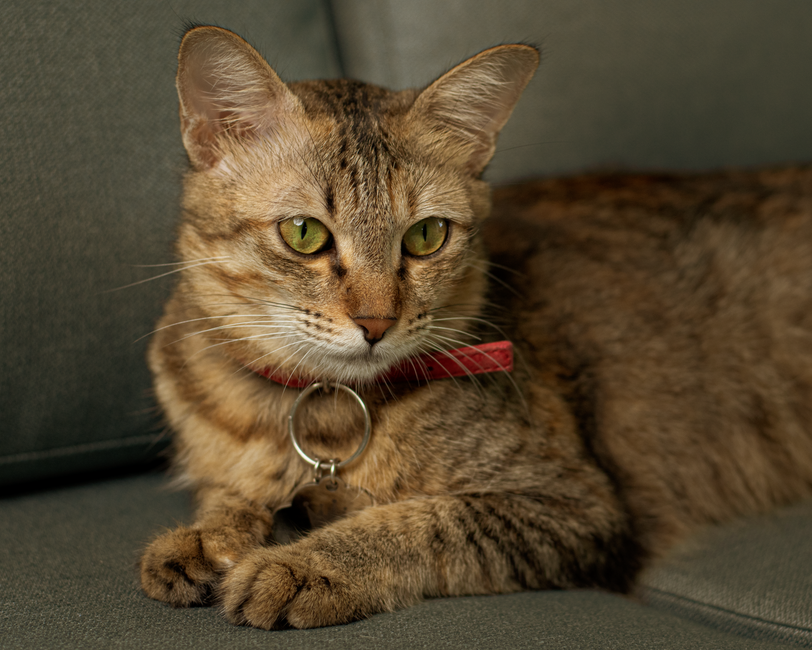
Indoor cats need vertical space. Cats are climbing animals; their natural territory has cliffs, trees, and rocks. A flat-floored apartment is, to a cat, a featureless plain.
What to do: create or expose vertical climbing options.
Free version:
- Clear off bookshelves to give the cat climbing levels.
- Allow access to the top of the refrigerator.
- Move a chair next to a window for an elevated viewing perch.
- Open access to the top of a tall cabinet.
Cost: $0 to $5 (a window perch attachment is $5 to $20, but DIY versions using existing furniture cost nothing).
Why it works:
- Provides exercise (climbing up uses different muscle groups than walking on the floor).
- Gives the cat a sense of safety and surveillance (cats with high vantage points are noticeably calmer).
- Engages exploratory behavior (changing the environment gives the cat new things to investigate).
- Reduces inter-pet conflict in multi-pet homes (vertical space lets cats share territory more comfortably).
Effect: measurable. Cats with adequate vertical territory exhibit fewer behavioral problems, less stress-related illness, and more spontaneous activity.
What to skip

A few interventions that cost more and deliver less than the five above:
- Diet cat food. Most "weight management" formulas are marginally lower in calories. The actual lever is portion size, not formulation. You can use any decent quality cat food and just feed less.
- Multiple-cat households as exercise. People sometimes get a second cat to "give the first one a friend to play with." This works for some cat pairs and emphatically does not for others. Adding a second cat is a major decision; do not make it primarily for weight management.
- Expensive cat trees. A $200 cat tree is fine. A free bookshelf rearrangement is also fine. The functional difference is small.
The combined plan
If you want to make a real difference for an overweight indoor cat, run all five interventions in parallel for 12 weeks:
- Puzzle feeder for one of the daily meals.
- Divide remaining food into 3 to 4 small meals throughout the day.
- Hide a portion of food in different rooms each day.
- 10 minutes of wand-toy play, ending with a kill and a meal.
- Open up vertical territory through the home.
Total cost: under $15. Time per day: 15 to 20 minutes of owner involvement. Expected weight loss in an overweight cat over 12 weeks: 1 to 2 pounds, which on a 12-pound cat is meaningful.
The takeaway
Indoor cat obesity is not a moral failing of the cat. It is a structural failure of how indoor cats are housed and fed. The fixes are not complicated, expensive, or technical. They are time-and-attention interventions that align the cat's day-to-day life more closely with what cats evolved to do.
Run all five for three months. The cat will be measurably leaner, measurably more active, and noticeably less anxious. None of it requires a special diet, a vet visit, or a behavior consultant. It just requires the owner to do the work.
For owners who want a structured starting point, the AAHA weight management guidelines and the Cornell Feline Health Center's obesity resources cover safe weight-loss pacing and when to involve a vet.
Frequently Asked Questions
How much should I feed an overweight indoor cat?
Feed to the cat's ideal weight, not its current weight, and measure portions rather than free-feeding. The numbers on the bag assume an active cat, so an indoor cat usually needs 15 to 25 percent less. Because aggressive calorie restriction can be dangerous for cats, confirm a target weight and a safe pace with your vet before cutting portions sharply.
How fast can a cat safely lose weight?
Slowly. Cats that lose weight too quickly risk hepatic lipidosis, a serious liver condition. A commonly cited safe target is roughly 0.5 to 2 percent of body weight per week, which for most overweight cats works out to 1 to 2 pounds over about 12 weeks. Steady, gradual loss with portion control and more activity is the goal, not a crash diet.
Will more playtime alone make my cat lose weight?
Not by itself. Play improves muscle tone, reduces anxiety behaviors, and burns some energy, but the larger lever for weight is portion size. The combination works best: ten minutes of daily wand-toy play ending in a "kill" and a meal, paired with measured portions served in smaller, more frequent meals.
Is a puzzle feeder better than a regular bowl for indoor cats?
For most indoor cats, yes. A puzzle feeder turns a 30-second meal into a 10-to-20-minute foraging activity, which engages the cat's hunting drive, slows eating, and reduces post-meal restlessness. Introduce it gradually with high-value food so the cat learns it produces good outcomes, since some cats refuse a puzzle feeder if it appears abruptly.
Why is my indoor cat always hungry and begging for food?
Indoor cats are predators with an unmet hunting drive. When food simply appears in a bowl once or twice a day, the cat experiences long fasting gaps and no pursuit cycle, which surfaces as begging, restlessness, and eating out of boredom. Spreading the same daily ration across four to six small meals and making the cat work for some of it usually reduces the begging.
Getting a vet on the weight plan without five clinic trips
The five fixes above work for the ordinary overweight indoor cat. They work faster with a vet setting the calorie target and checking the number every few weeks, and that is where most owners drop off, because each check-in is another visit fee and another carrier ride the cat hates.
Dutch is an online vet membership: video visits with a vet licensed in your state, unlimited messaging for the follow-ups, and prescription diets or medication shipped in most states, for $132 a year. It suits weight management well because the work is mostly conversation and adjustment. The one thing it cannot do is weigh the cat, so buy a baby scale.