How to Tell If Your Cat Is in Pain (10 Subtle Signs)
Cats hide pain better than almost any other domestic animal. Ten subtle behavioral and physical signs that something is wrong, even when the cat seems normal.
How to tell if cat is in pain? The honest answer from a former licensed insurance agent who now writes pet-care guidance.
Cats are evolutionarily wired to hide pain. As both predators and prey species in the wild, showing weakness was a survival liability. Domestication has not changed this. Your cat, if injured or ill, will work harder than almost any other domestic animal to seem fine.
The result: by the time most owners notice their cat is in pain, the underlying condition has often been progressing for weeks or months. The signs were there earlier, but they were subtle, and "still seems fine" carried more weight than the small behavioral shifts that should have flagged something.
This is the working reference. Ten signs of cat pain that owners commonly miss, ranked from most to least subtle.
1. Decreased grooming or sudden over-grooming
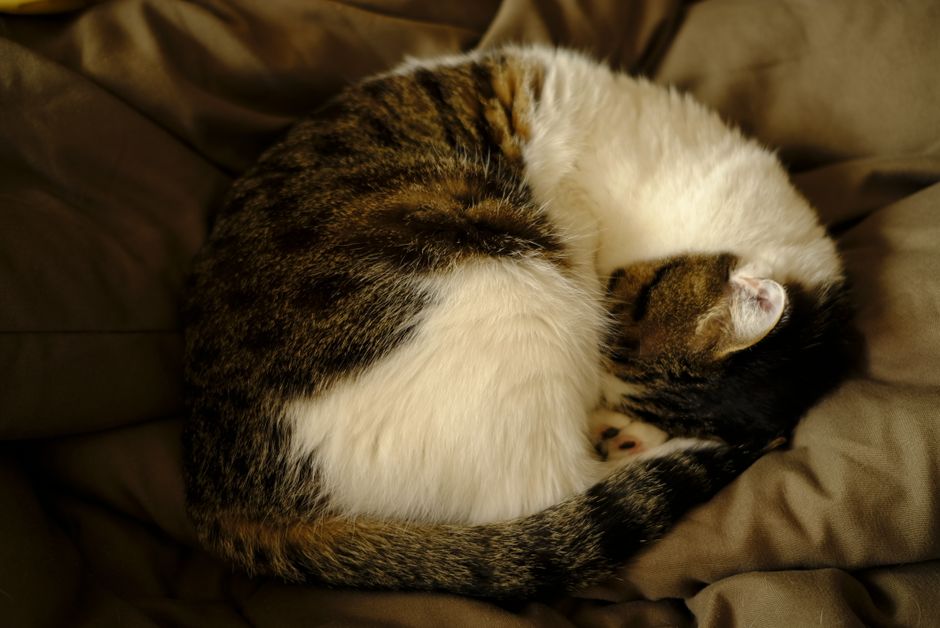
Healthy cats spend 30 to 50 percent of their waking hours grooming. The amount and quality of grooming is a sensitive indicator of how the cat feels.
Decreased grooming (matted fur, dull coat, dandruff appearing) usually indicates either depression, mobility issues that prevent reaching certain areas, or general malaise. Cats in pain often stop grooming because the act of grooming is uncomfortable or because they don't feel up to it.
Over-grooming a specific area can indicate localized pain. A cat that suddenly licks at one paw constantly may have an injury, paw pad irritation, or arthritis in that joint. Over-grooming the abdomen can indicate urinary tract issues. Over-grooming the back can signal spinal pain.
Look for changes in coat appearance and grooming patterns. Either direction is a signal.
2. Subtle changes in posture or gait
Cats compensate for pain by altering how they move. The compensations are often slight enough that owners attribute them to "getting older" rather than to pain.
Watch for:
- Hunched posture when sitting or standing. Cats with abdominal pain often sit with their back arched.
- Tucked-up belly that wasn't there before.
- Stiffness when getting up, especially after rest. The cat may take longer to stretch or seem reluctant to move initially.
- Limping or favoring a limb, even if subtle. Watch for asymmetry in the gait.
- Reluctance to jump to favored spots. The cat who used to jump on the counter now climbs up by chair-then-counter.
- Difficulty with stairs, especially going up.
Cats with arthritis (which is extremely common in older cats but underdiagnosed) often show these signs gradually, and owners normalize them as aging rather than identifying them as treatable pain.
3. Changes in eating or drinking habits

Cats in pain often eat less, eat more slowly, or stop eating altogether. The mechanism is sometimes direct (oral pain making chewing painful, abdominal pain making eating uncomfortable) and sometimes indirect (general malaise reducing appetite).
Watch for:
- Decreased appetite even when offered favorite foods.
- Eating more slowly than usual.
- Dropping food while chewing (often indicates dental pain).
- Approaching food then walking away.
- Increased thirst can indicate kidney issues or diabetes (both painful at advanced stages).
- Decreased thirst can indicate nausea or oral pain.
A cat that has not eaten in 24 hours warrants vet attention regardless of other symptoms. Cats can develop hepatic lipidosis (a serious liver condition) from rapid weight loss, so prolonged anorexia is genuinely dangerous.
4. Changes in litter box habits
Pain often shows up in litter box behavior, sometimes obviously (urinary issues) and sometimes subtly (a cat with joint pain may avoid a high-sided box).
Signs:
- Eliminating outside the box, especially in unusual locations.
- Vocalizing in the box. A cat crying while urinating almost always indicates urinary tract pain.
- Frequent visits to the box with little output.
- Straining without producing.
- Blood in urine or stool.
- Avoiding the box entirely despite no other obvious behavioral cause. Sometimes this is mobility-related: the box is too high, the box is upstairs, the litter is uncomfortable on painful paws.
Urinary issues in cats are a particular emergency. A male cat unable to urinate is in genuine danger and needs same-day vet attention. If your cat is straining without producing urine, this is not a wait-until-Monday situation.
5. Hiding or social withdrawal
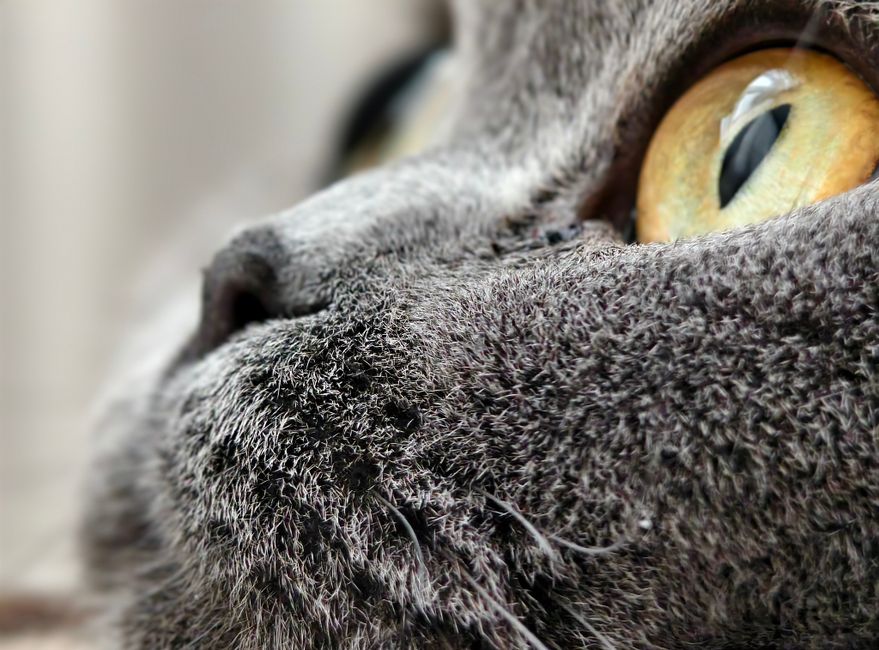
A cat that suddenly hides more is telling you something. Cats in pain often withdraw to quiet, dark, low-traffic spots. Under beds, in closets, behind furniture.
The opposite can also be true: some cats in pain become more clingy, seeking out their owner more frequently. The change from baseline matters more than the direction.
Signs:
- The cat spends more time alone or hidden than usual.
- Less interest in interacting with family members or other pets.
- Avoiding social spaces (the cat who used to sit on the couch with everyone now sits elsewhere).
- Or: more vocal, more clingy, seeking constant proximity.
Behavioral changes in either direction warrant attention if they persist beyond a few days.
6. Decreased activity or play
Cats in pain reduce activity. The high-energy cat who used to play 20 minutes a day now plays 5 minutes. The cat who patrolled the house regularly now stays in one room. The cat who chased the laser pointer with abandon now watches it without engaging.
Signs:
- Less interest in play.
- Less vertical movement (jumping, climbing).
- More sleeping than usual (and cats already sleep a lot, so "more than usual" matters).
- Reduced exploration of the environment.
Some of this is normal aging. Some of it is pain. The way to tell: did the change happen suddenly or gradually? Sudden changes are more concerning.
7. Changes in vocalization
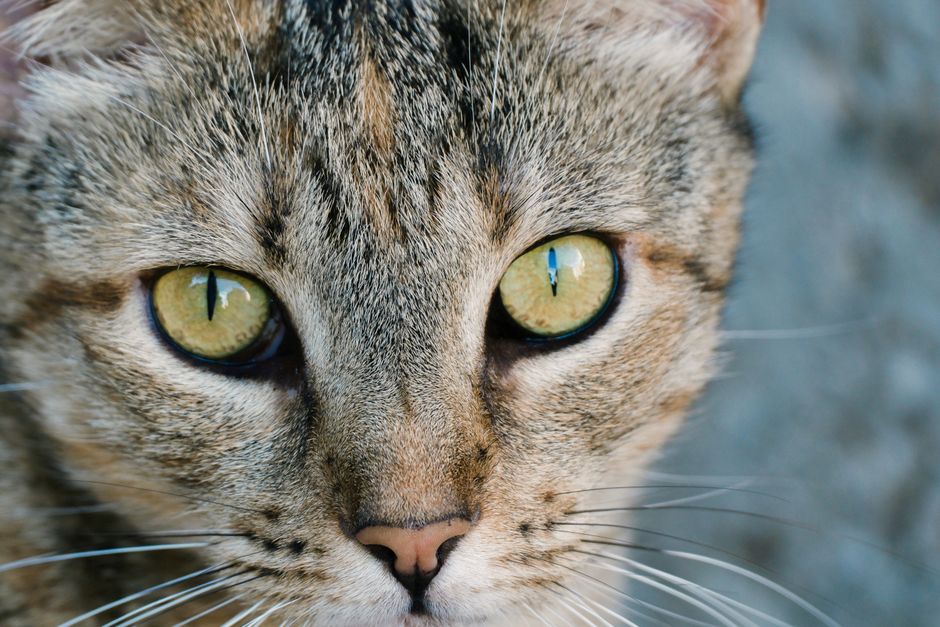
Cats vocalize differently when in pain. The pattern varies by individual: some cats become more vocal (constant meowing, yowling), others become quieter than usual.
Signs:
- Increased vocalization that doesn't match a known cause (hunger, litter box need, attention).
- A new tone of vocalization. Lower-pitched, more urgent, or eerie yowls.
- Vocalizing during specific activities: while urinating, while jumping, while being picked up.
- Decreased vocalization in cats who normally vocalize, paired with other behavioral changes.
A cat that yowls while urinating is in obvious distress and needs vet attention. Other vocalization changes are subtler but worth noting in a journal.
8. Changes in facial expression
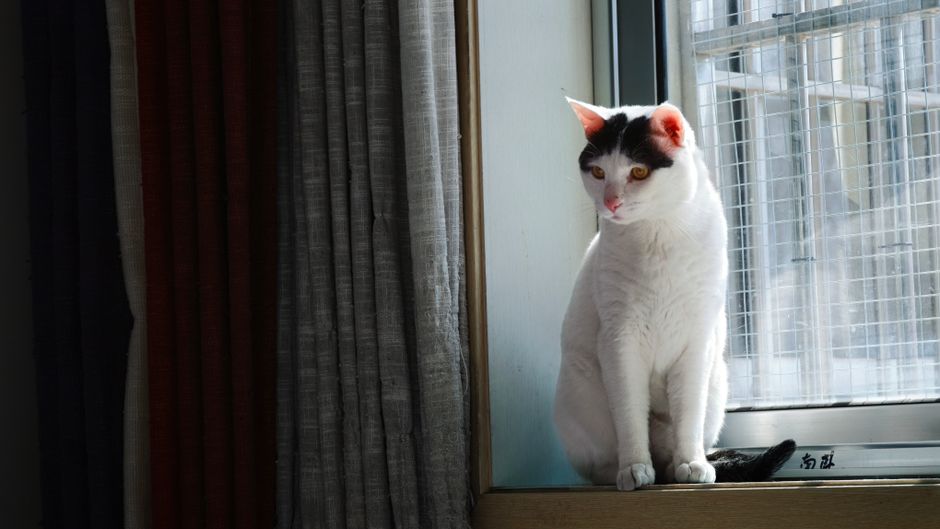
Researchers have developed tools (like the Feline Grimace Scale) to assess cat pain through facial features. The signs are subtle but real.
Pain-indicating facial signs:
- Squinting or partially closed eyes. A cat in pain often holds eyes more closed than relaxed.
- Ears flattened or rotated outward.
- Whiskers tense and pulled forward or against the face.
- Tense muzzle with a pursed-mouth appearance.
- Head held lower than usual.
Compare to your cat's relaxed face. Significant deviation, sustained over days, is a signal.
9. Changes in sleep position
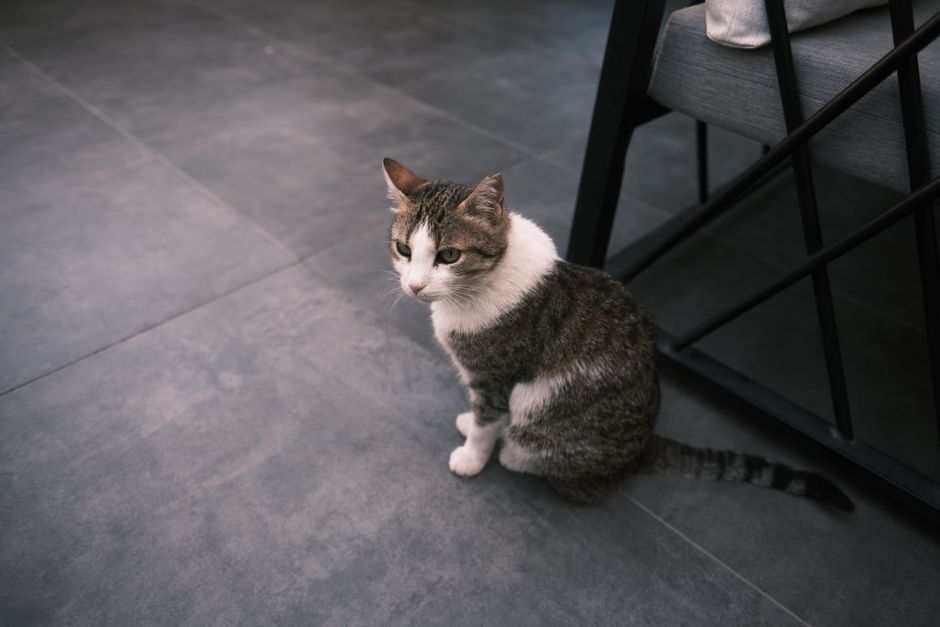
Cats in pain often sleep in different positions than usual. The normal "loaf" or curled-up sleep posture may give way to unusual postures.
Signs:
- Sleeping in a hunched or crouched position rather than relaxed.
- Sleeping with the body asymmetrically positioned (favoring one side).
- Sleeping in unusual locations.
- Restless sleep, frequent position changes.
- Sleeping with the head down lower than usual.
This is a sensitive indicator that owners often notice subconsciously without identifying what changed.
10. Changes in interaction with petting or handling
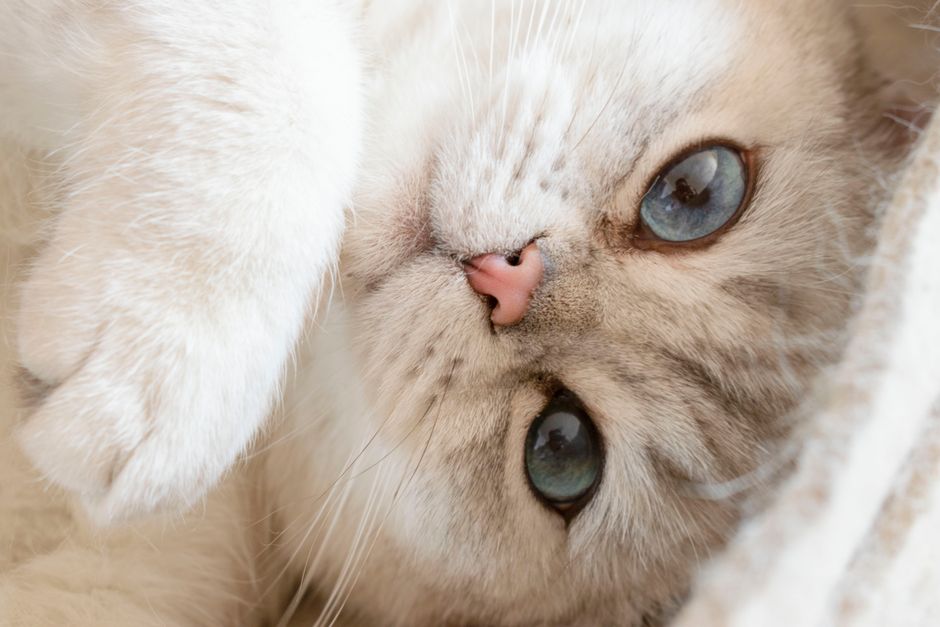
A cat that previously enjoyed petting and now flinches, hisses, or moves away may be experiencing pain in the area being touched. Cats with arthritis often don't want their hindquarters touched. Cats with abdominal pain pull away from belly contact. Cats with dental pain may not want their face touched.
Signs:
- Avoiding being picked up.
- Reacting negatively to petting in specific areas.
- Hissing or biting in response to handling that previously was fine.
- Growling when approached.
These reactions are not "the cat being grumpy." They are usually communication.
What to do if you spot signs of pain
If two or more of these signs are present, especially if they emerged together:
- Make notes. When did the change start? What signs are present? Any related events (new pet, move, recent vet visit, dietary change)?
- Schedule a vet visit. Cats need to be evaluated when pain signs are present. The earlier the better.
- Don't medicate without veterinary guidance. Many human pain medications are toxic to cats. Acetaminophen is dangerous. Ibuprofen is dangerous. Even small doses can cause serious harm.
- Reduce environmental stress while waiting for the appointment. Quiet space, easy access to food, water, litter box, and resting spots.
- Bring your notes to the appointment. The vet's diagnostic process benefits from your observations of the at-home behavior.
Why this matters more than you think
Underdiagnosed pain in cats is a quiet epidemic. The most commonly underdiagnosed condition is feline osteoarthritis, which affects an estimated 60-90 percent of cats over 12. Most of these cats are not on pain management because their owners didn't recognize the signs.
Treatable pain that goes untreated reduces quality of life, accelerates decline, and can mask underlying conditions that are themselves treatable. Catching the signs early and getting the cat evaluated catches things in the window when intervention helps most.
The American Animal Hospital Association pain management guidelines and the Cornell Feline Health Center both stress that recognizing pain early is the part owners can most directly influence, because the cat will not announce it.
Frequently Asked Questions
How can I tell if my cat is in pain or just tired?
Tiredness usually passes after rest, while pain produces a cluster of changes that persist: reduced grooming, altered posture, hiding, and reaction to being touched. The tell is the combination. A cat that is simply tired still grooms, eats, and moves normally once rested. A cat with two or more of the signs above, especially appearing together or suddenly, is more likely in pain than tired.
Do cats purr when they are in pain?
Yes, sometimes. Purring is not only a sign of contentment. Cats also purr when stressed, frightened, or in pain, possibly as a self-soothing mechanism. So a purring cat that is also hiding, hunched, or off its food may still be hurting. Read purring alongside the other signals rather than as proof the cat is fine.
What can I give my cat for pain at home?
Nothing without veterinary direction. Many common human pain relievers, including acetaminophen and ibuprofen, are toxic to cats and can be fatal even in small doses. The safe step at home is to provide a quiet space with easy access to food, water, litter, and resting spots, then get the cat evaluated so a vet can prescribe a feline-appropriate medication.
At what age do cats start showing arthritis pain?
Arthritis becomes common in middle-aged and senior cats, and studies cited by veterinary groups estimate it affects a large majority of cats over 12. The signs are usually gradual: reluctance to jump, stiffness after rest, and difficulty with stairs. Because owners tend to read these as normal aging, feline arthritis is widely underdiagnosed and undertreated.
How long can a cat be in pain before I should see a vet?
Do not wait if the signs are clear. A cat that has not eaten for 24 hours, is straining in the litter box without producing urine, or is yowling while urinating needs same-day attention. For subtler, persistent changes that last more than a few days, schedule a vet visit rather than continuing to watch, since cats hide pain and the underlying issue is often progressing.
The takeaway
Cats hide pain. The signs are there if you know what to look for: changes in grooming, posture, gait, eating, litter habits, hiding, activity, vocalization, facial expression, sleep position, and reaction to handling.
Most of these are subtle individually. Two or three appearing together, or any one appearing suddenly, is enough to warrant a vet visit. The cat who "seems off" usually is, and the underlying cause is usually something a vet can address.
Trust the small signals. Cats are not faking when they show them; they're showing you what they can while still trying to seem fine.
When you have counted two or three signs
The hard part of this list is not spotting one sign, it is deciding whether what you are seeing adds up to something. Two or three together, or any one of them appearing suddenly, is the threshold for a vet visit. If you are hovering at that threshold and second-guessing yourself, JustAnswer's veterinarians will go through what you are actually seeing for a few dollars. It does not replace the physical exam that will eventually be needed, and a cat in obvious distress should go in rather than online, but it is a reasonable way to sanity-check the count before you book.