How Often Should You Bathe a Dog? (And Why Most Owners Get It Wrong)
The honest answer on how often to bathe a dog, by coat type and lifestyle. Why over-bathing causes more skin problems than it solves.
How often should you bathe a dog? The honest answer from a former licensed insurance agent who now writes pet-care guidance.
The short answer most owners do not want to hear: most dogs need a real bath every four to six weeks, and many do better at six to eight. The owners scrubbing their dog every weekend are doing more skin damage than the owners who only bathe when the dog stops smelling like a dog.
The longer answer depends on coat type, lifestyle, skin condition, and what counts as a "bath." We are going to walk through what the actual veterinary dermatology guidance is, where the over-bathing trap comes from, and how to build a routine that keeps the dog clean without stripping the coat.
The default for a healthy dog

Veterinary dermatologists, when asked the unvarnished question, give roughly the same answer: a healthy adult dog with a normal coat and no skin issues should be bathed once every four to six weeks. Some long-coated and double-coated breeds extend that to every six to eight weeks.
That is not a typo. Once a month, give or take.
The reason: a dog's skin is structurally different from a human's. Their epidermis is thinner. Their pH is more neutral than ours (7.0 to 7.5 versus 5.5 for humans). And their skin produces sebum, the natural oil layer that waterproofs the coat and protects against bacterial overgrowth, on a slower cycle than human skin. Strip that oil layer with frequent shampooing and you remove the dog's first-line skin defense.
The result of over-bathing: dry skin, itchy skin, dandruff, dull coat, increased shedding, and in severe cases, secondary skin infections from the disrupted barrier. Most "my dog has dry skin" complaints in the vet's office trace back to bathing too often, sometimes with the wrong product. The American Kennel Club's veterinary guidance echoes this coat-type-dependent approach, and the American Veterinary Medical Association outlines when persistent skin issues warrant a vet visit rather than another bath.
When to deviate from the default
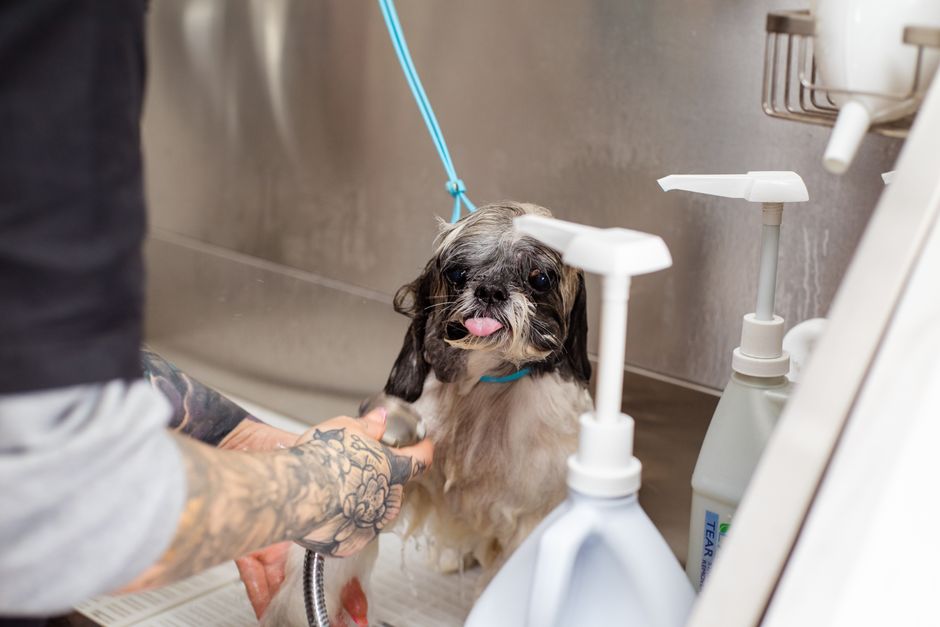
The four-to-six-week default is for a healthy adult on a normal lifestyle. There are real reasons to bathe more or less often.
Bathe more often if:
- The dog rolled in something disgusting. Spot-cleaning is fine, but if the smell or substance is everywhere, a full bath is warranted regardless of timing.
- The dog has a vet-prescribed medicated shampoo regimen. For specific skin conditions (atopic dermatitis, bacterial overgrowth, fungal infections), the vet may prescribe weekly or even more frequent medicated baths. Follow the prescription.
- The dog has visible dirt or debris that brushing won't remove. Mud caked into the coat, sap, swimming-pool chlorine residue.
- The dog has a known allergen issue and bathing genuinely helps. Some dogs with environmental allergies do better with more frequent rinses to remove pollen from the coat. This is a vet-supervised decision, not a default.
Bathe less often if:
- The dog has a thick double coat (Huskies, Malamutes, Great Pyrenees, Bernese Mountain Dogs, Newfoundlands, Australian Shepherds). The double coat self-regulates oil distribution and benefits from less frequent bathing. Six to eight weeks is more appropriate. Excessive bathing can damage the undercoat's ability to regrow properly.
- The dog has dry, sensitive, or aging skin. Senior dogs in particular often need bathing intervals stretched to eight to ten weeks. The skin produces less oil with age and recovers more slowly from disruption.
- The dog has any active skin condition. Until the vet says otherwise, less is usually more.
- The dog spends almost all time indoors and is naturally low-odor. Some breeds (Basenjis are the canonical example, but many smaller indoor dogs qualify) genuinely do not need monthly baths.
What about between baths
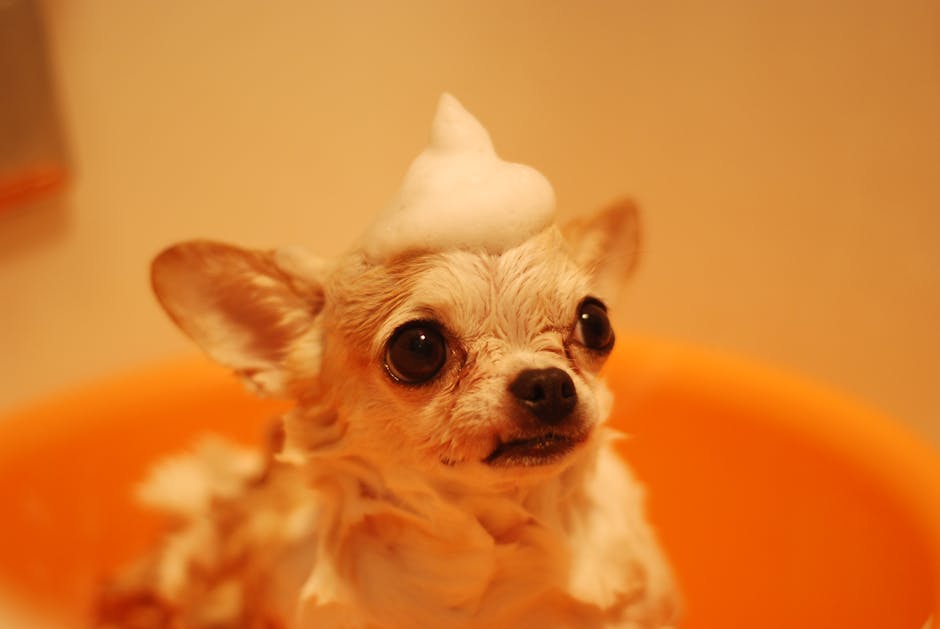
The space between baths is where good grooming actually happens. A dog that gets brushed regularly stays cleaner longer because the brushing removes loose hair, surface debris, and distributes the natural oils through the coat. A dog that gets bathed monthly without brushing in between will look greasy and matted within two weeks.
The between-baths routine for most dogs:
- Brush two to three times per week for short and medium coats. Daily for long or double coats.
- Wipe paws after walks in wet or muddy conditions to keep mud off the coat.
- Wipe the face daily for breeds prone to tear staining (white-coated breeds, brachycephalic dogs).
- Spot-clean as needed with a damp washcloth or pet-safe wipes for localized issues.
- Trim nails monthly (not part of bathing per se, but part of the same regular-care rhythm).
This routine extends the time between full baths considerably and leaves the dog cleaner overall than a weekly bath without brushing.
What the wrong shampoo does

Even at correct frequency, the wrong product can cause the same problems as over-bathing.
Avoid:
- Human shampoo of any kind. Human shampoo is calibrated for human skin pH (5.5), which is more acidic than canine skin (7.0-7.5). Repeated use disrupts the canine skin barrier.
- Heavily scented shampoos. Fragrance is the most common skin allergen for dogs. The bath should leave the dog smelling like clean dog, not like artificial flowers.
- Shampoos with sulfates as the primary cleanser. Effective at cleaning, harsh on the skin barrier.
- Two-in-one shampoo and conditioner products. The conditioning agents are usually inadequate for canine coat needs and the cleansers can be aggressive.
Choose:
- A pH-balanced canine shampoo as your default. Earthbath, Buddy Wash, and similar national-brand basics work for most dogs.
- An oatmeal-based shampoo for sensitive or dry-skin dogs.
- A medicated shampoo only when prescribed by a vet for a specific condition.
- A whitening shampoo sparingly, when a white coat needs a deeper clean. Not as a default product.
The bathing process that minimizes skin disruption

Even at the right frequency with the right product, technique matters.
- Brush the dog thoroughly before bathing. Tangles tighten when wet and become much harder to work out. Pre-bath brushing also distributes oils and removes loose hair.
- Use lukewarm water, not hot. Hot water strips oils faster and can be uncomfortable for dogs whose normal body temperature is higher than ours.
- Wet thoroughly before applying shampoo. Water needs to penetrate the coat to the skin before shampoo is applied; otherwise you are just washing the surface of the fur.
- Apply shampoo, lather gently, leave for 3 to 5 minutes. This is where most owners short-cut. The contact time is what cleans, not the scrubbing. A short scrub followed by immediate rinse leaves residue on the skin and underclean fur.
- Rinse thoroughly. Then rinse again. Shampoo residue is a major cause of post-bath skin irritation. When you think you are done rinsing, rinse for another 60 seconds.
- Use a conditioner if the coat needs it. Long-coated, dry-skinned, or older dogs often benefit. Apply, leave for 1 to 2 minutes, rinse.
- Towel-dry, then air or low-heat blow dry. Hot blow drying damages the coat. If using a dryer, use the cool or low setting and keep it moving.
- Brush again after drying. Locks in the smooth, distributed-oil finish.
Common over-bathing scenarios to avoid
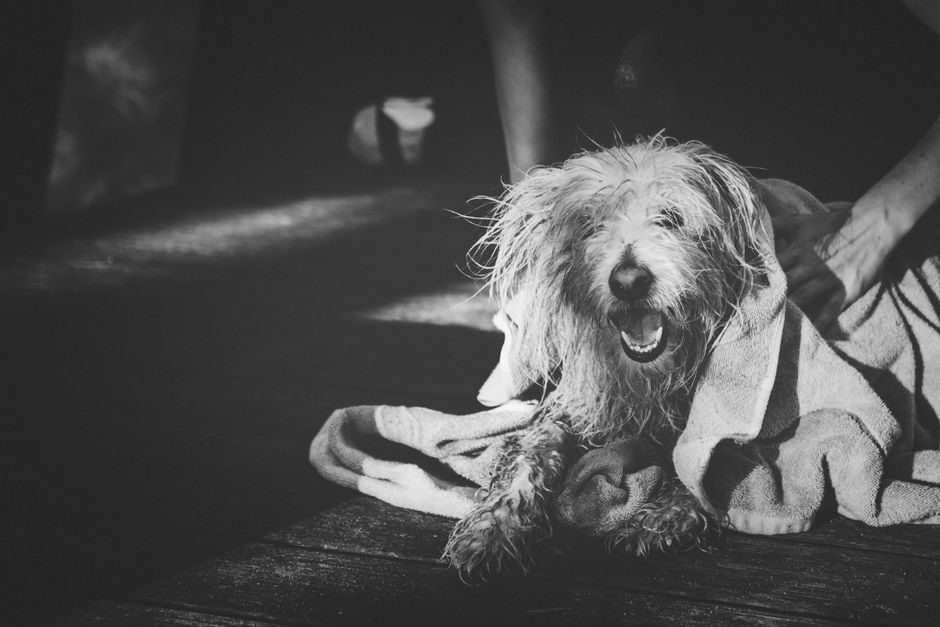
A few specific patterns we see often enough to call out:
Bathing after every walk in summer. Dogs do not need a full bath after every walk. Wipe down, spot clean, and leave the rest for the regular schedule.
Bathing every time the dog smells "doggy." A normal dog smells like a dog. The smell intensifies between baths and is not a problem unless it is genuinely strong (rolled-in-something) or sour (skin condition starting). Some breed-specific smells (the famous "Frito feet" yeast scent) are normal flora.
Weekly baths "to stay ahead of allergies." Unless prescribed by a vet for confirmed atopy, this usually creates allergy-mimic symptoms (dry, itchy skin) that the owner then misattributes back to the original allergy.
Bathing puppies before vaccines are complete. Avoid stressing or chilling young puppies before their immune system is fully developed. Wait until at least 8 weeks for the first bath, and do it gently in warm conditions.
What about waterless or rinse-free shampoos
Waterless dog shampoos (foam or spray products you wipe on and brush out) are useful as a between-baths tool, particularly for dogs that genuinely hate water or for owners on the move. They are not a full replacement for water-and-shampoo bathing, but they are perfectly reasonable for spot freshening every couple of weeks.
Quality matters here too. Look for the same pH-balanced, low-fragrance criteria as for traditional shampoo.
Frequently Asked Questions
How often should you bathe a dog?
A healthy adult dog with a normal coat and no skin issues should be bathed once every four to six weeks, and many do well at six to eight weeks. Long-coated, double-coated, and senior dogs generally stretch the interval longer, while dogs on a vet-prescribed medicated regimen follow their specific schedule. Bathing every weekend does more skin damage than good.
Can you bathe a dog too much?
Yes, and over-bathing is one of the most common causes of canine skin problems. Frequent shampooing strips the sebum oil layer that waterproofs the coat and protects against bacterial overgrowth, leading to dry, itchy skin, dandruff, dull coat, and sometimes secondary infections. Many "dry skin" complaints at the vet trace directly back to bathing too often.
Can I use human shampoo on my dog?
No. Human shampoo is formulated for human skin pH around 5.5, which is more acidic than canine skin at roughly 7.0 to 7.5, and repeated use disrupts the dog's skin barrier. Use a pH-balanced canine shampoo instead, choosing an oatmeal-based formula for sensitive or dry-skinned dogs.
How do I keep my dog clean between baths?
Regular brushing is the key, since it removes loose hair and surface debris while distributing natural oils through the coat. Brush short and medium coats two to three times a week and long or double coats daily, wipe paws after muddy walks, spot-clean with a damp cloth or pet-safe wipes, and use a waterless shampoo for occasional freshening.
How often should you bathe a puppy?
Wait until a puppy is at least 8 weeks old before the first bath, and do it gently in warm conditions to avoid chilling or stressing a young animal whose immune system is still developing. After that, follow the same four-to-six-week guideline for healthy coats, adjusting for coat type and any vet guidance.
The takeaway
Most healthy adult dogs do best on a four-to-six-week bathing schedule, with regular brushing in between. Long or double-coated breeds and seniors stretch to six-to-eight weeks. Dogs with active skin conditions or vet-prescribed regimens follow specific guidance.
The goal is a clean, healthy coat with the natural oil layer intact. The path is patience, the right product, and the discipline not to over-bathe just because the calendar is on a Saturday.
Most "my dog has dry, itchy skin" complaints in the vet's office have the same root cause. Less is usually more.
When the itch is not a bathing problem
If you have already backed off to a six-week schedule with a gentle shampoo and the dog is still scratching, the bath was never the problem. Environmental allergies, yeast, and fleas all present as "dry itchy skin," and all three need a diagnosis, not a different bottle.
Skin is the single most common thing an online vet treats. Dutch pairs you with a vet licensed in your state over video, can prescribe allergy and skin medication shipped to your door in most states, and includes unlimited follow-ups for a flat $132 a year. Use it for the itchy dog whose problem keeps coming back; use your local clinic for anything that needs a scrape or a swab.