Five Cat Food Myths Vet Schools Actually Debunk
What veterinary nutritionists actually teach about cat food, versus what the bag and the internet tell you. Five myths that lead to real harm.
Cat food myths: The honest answer from a former licensed insurance agent who now writes pet-care guidance.
Cat owners get more contradictory advice about food than dog owners do. Part of this is that cats are stranger creatures than we usually give them credit for, and their nutritional requirements are odd by mammal standards. Part of it is that the cat food market is dominated by brands that have learned to package marketing claims in ways that sound nutritional but are not.
What follows is the actual veterinary nutrition consensus on five common cat food beliefs, drawn from what is taught in veterinary nutrition curricula, not from the front of the bag. Some of these will surprise you. One or two might change how you feed your cat.
Myth 1: Dry food is good for cats' teeth

This is the most persistent and most damaging cat food myth on the market.
The reasoning is intuitive: dry kibble is hard, so the act of crunching it should mechanically clean teeth. Many "dental health" cat foods are sold on exactly this premise.
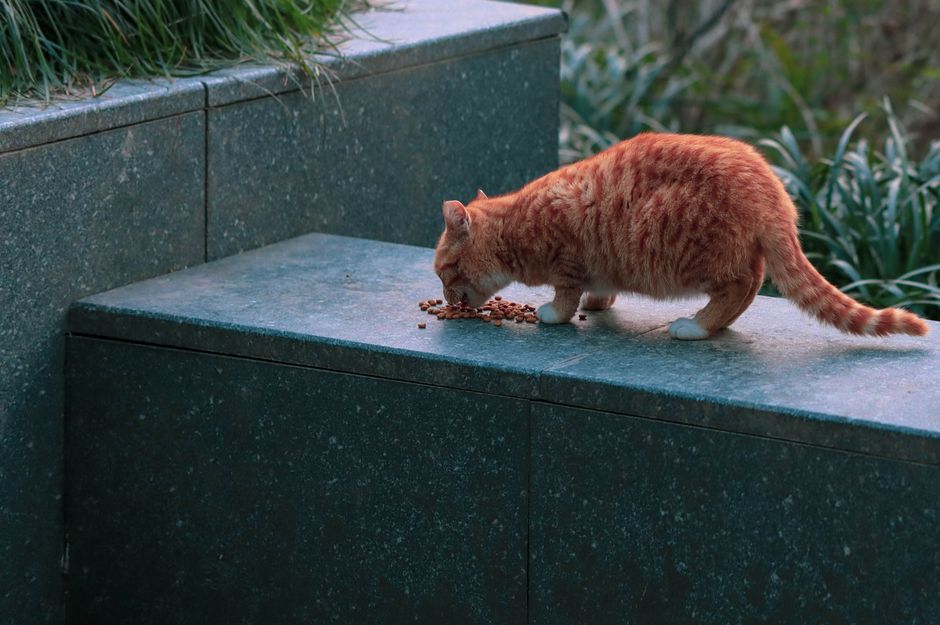
The problem is that cats do not actually crunch their food the way the marketing implies. Watch a cat eat kibble. Most cats either swallow small kibbles whole or break them with one or two quick bites that produce a clean fracture rather than scraping. There is no scraping action against the tooth surface, which is what would actually clean.
Worse, the carbohydrates in kibble (cats need more starch in dry food than wet, because starch is what holds the kibble together) feed the bacteria that cause dental plaque. Cats on long-term dry-food diets have measurable rates of periodontal disease that are not lower than cats on wet food, and in some studies are higher.
What actually works for cat dental health: daily tooth brushing (yes, it can be done; train kittens early), dental treats specifically designed and tested for plaque reduction (look for the Veterinary Oral Health Council seal on accepted products), and professional dental cleanings every two to four years. The food in the bowl is not doing the work the marketing claims.
Myth 2: Cats need carbohydrates as a major energy source
This is the commercial cat food industry's most consequential framing, because most kibble is mathematically required to contain significant carbohydrate to maintain its physical form.
The veterinary nutrition reality is that cats are obligate carnivores. Their metabolism is calibrated for protein and fat as the primary energy sources, with very limited capacity to use carbohydrates. Cats lack salivary amylase entirely and have substantially reduced pancreatic amylase compared to omnivores. They do not have the metabolic machinery to handle high-carb diets the way dogs or humans do.
When cats eat carbohydrate-heavy diets, they convert excess carbs to fat rather than using them for energy. This is one of the biological drivers of the indoor-cat obesity epidemic. The other driver is overfeeding, but the food composition is doing real work.
This does not mean every cat needs a zero-carb raw diet. Cats can eat moderate amounts of carbohydrate without immediate harm. But the framing that cats "need" carbohydrates the way humans do is biologically unsupported, and it leads to dietary recommendations that are calibrated wrong for the species.
A wet food (canned or pouch) typically has 5 to 12 percent carbohydrate on a dry matter basis. A typical dry kibble is 30 to 50 percent carbohydrate. The difference matters, particularly over years.
Myth 3: Indoor cats need less food
Half-true, in a way that misleads more than it informs.
The honest statement: indoor cats are usually less active than outdoor cats, so they have lower total caloric requirements. The misleading statement: indoor cats need a special "indoor formula" that is fundamentally different.
What "indoor formula" cat foods actually are, in most cases: regular cat food with slightly reduced fat and slightly increased fiber. The reasoning is that the higher fiber content supposedly produces more satiety per calorie, helping with weight management.
In practice, most indoor formulas are marketing differentiators rather than meaningful nutritional adjustments. The amount of fiber added is small, and the fat reduction is often partial. Cats are not eating these foods feeling magically more satisfied.
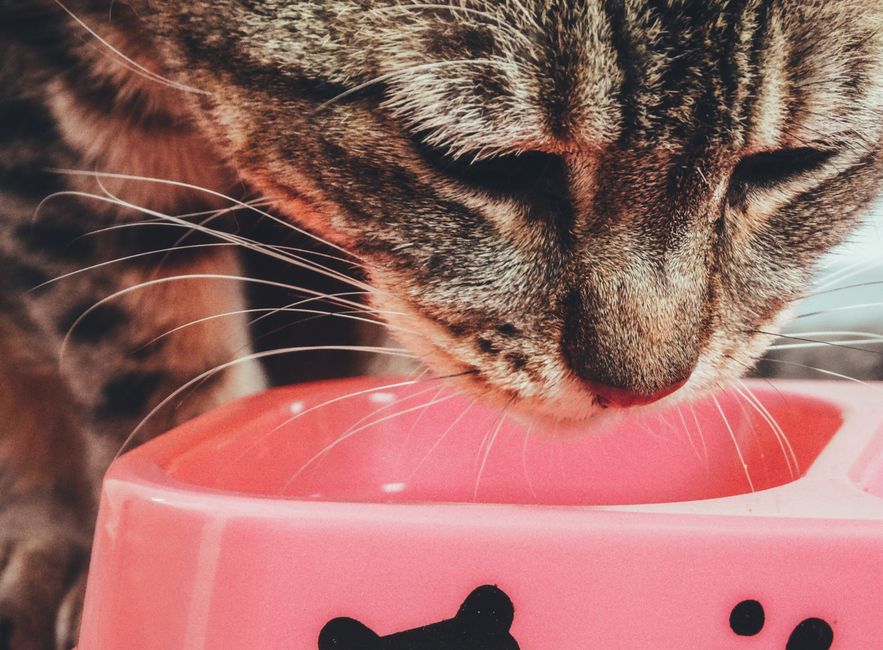
The actually useful thing to do for an indoor cat: feed less. The portion sizes printed on cat food bags are calibrated for active cats with average builds. Most indoor cats need 15 to 25 percent less than the bag suggests. Reduce the portion before you switch the formula.
If you want a meaningful food adjustment for an indoor cat, switch from dry to wet food entirely. Wet food has substantially more water content (75 to 80 percent versus 6 to 10 percent for dry), which means the same volume in the bowl has fewer calories and more satiety. This is a real intervention, not a marketing one.
Myth 4: Grain-free cat food is healthier
This belief migrated to cats from the dog food world, where it was already weakly supported. In cats it is even less coherent.
True grain allergies in cats are rare. Most cats handle small amounts of grain without issue. The cats with confirmed grain sensitivities are usually reacting to a specific protein contaminant (residue from how the grain was stored or processed) rather than the grain itself.
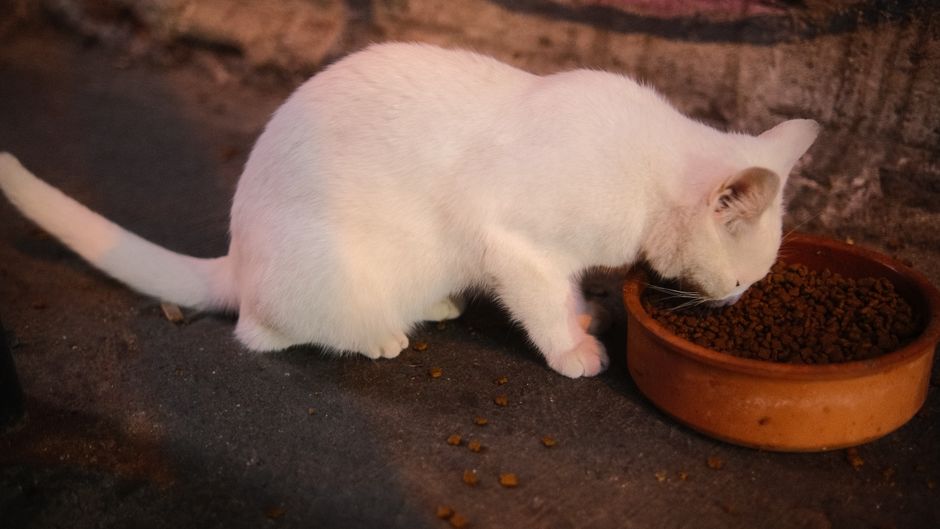
Grain-free cat foods often replace grains with potatoes, peas, lentils, or chickpeas. These ingredients add carbohydrates (sometimes more than the grains they replaced) without contributing meaningful additional nutrition for cats. The "grain-free" label is, for most cats, a marketing claim that does not correspond to a meaningful health benefit.
There is one genuine concern: in dogs, grain-free diets have been linked to a specific cardiac condition (dilated cardiomyopathy) that the FDA has investigated. Whether the same risk applies to cats is less clear, but the conservative position from veterinary cardiologists is that grain-free is not worth pursuing for cats unless there is a specific medical reason.
If you are feeding grain-free because you are convinced your cat has a grain sensitivity, the diagnostic step is a proper elimination diet supervised by a vet, not switching brands based on a hunch.
Myth 5: Premium cat food brands are always better

This one is more nuanced, because the premium tier does have real quality advantages on average. But the gap between premium and mid-tier is often smaller than the price difference would suggest, and some premium brands trade on marketing as much as on substance.
The actual nutrition signal in cat food is not the brand. It is:
- Named animal protein as the first ingredient. Chicken, salmon, turkey, lamb. Not "meat by-products" and not vegetable-protein concentrates listed first.
- AAFCO complete and balanced statement on the bag, ideally one that says the food was tested in feeding trials, not just calculated to meet nutrient profiles.
- Wet or canned format, particularly for cats prone to urinary issues. This matters more than brand prestige.
- A formulation by a qualified veterinary nutritionist. Some brands have full-time PhD nutritionists on staff. Others use consultants or template recipes.
- Consistent quality control and recall history. The brands with the best food safety records are not always the most premium-priced.
Several mid-tier brands (Purina Pro Plan, Hill's Science Diet, Royal Canin) employ board-certified veterinary nutritionists and run feeding trials. Several premium boutique brands do not. The marketing of "natural ingredients" and "no fillers" is not the same as nutritional rigor.
If you have a healthy adult cat with no medical issues, a well-formulated mid-tier wet food fed in correct portions is, for most cats, a better choice than a premium dry food.
Frequently Asked Questions
Is wet food or dry food better for cats?
For most cats most of the time, wet food has the edge. It is 75 to 80 percent water versus 6 to 10 percent for dry, which supports hydration and urinary health, and it is naturally lower in the carbohydrate that holds kibble together. Dry food is more convenient and cheaper, but it is not better for teeth, despite the common claim.
Does dry food actually clean a cat's teeth?
No. Cats either swallow kibble whole or fracture it cleanly with one or two bites, so there is no scraping action against the tooth surface. Real dental care means tooth brushing, VOHC-accepted dental products, and professional cleanings, not relying on the food in the bowl.
Do cats need grain-free food?
Almost never. True grain allergies in cats are rare, and grain-free formulas usually swap grains for potatoes, peas, or lentils that add carbohydrate without extra nutrition. Unless a vet has diagnosed a specific need through an elimination diet, grain-free is a marketing label rather than a health benefit.
Are expensive premium cat foods always better?
Not reliably. The signal of quality is a named animal protein first, an AAFCO complete-and-balanced statement backed by feeding trials, and formulation by a qualified veterinary nutritionist. Several mid-tier brands meet that bar while some premium boutique brands do not.
How much should I feed an indoor cat?
Usually 15 to 25 percent less than the bag suggests, since portion guidance is calibrated for active cats. Reduce the portion before buying a special "indoor formula," which is mostly regular food with minor fiber and fat tweaks. Switching from dry to wet is a more meaningful change than the formula label.
What this all adds up to
The veterinary nutrition consensus, simplified:
- Wet food beats dry food for most cats, most of the time.
- Cats are obligate carnivores. Diet should reflect that, with named animal protein as the foundation.
- "Indoor formula" and "grain-free" are mostly marketing.
- Dental health requires actual dental care, not magical kibble.
- The brand on the bag matters less than the formulation, the format, and the portion size.
Almost none of this is what the front of the bag tells you. Read the back. Read the ingredient list. And read what veterinary nutritionists publish in textbooks rather than what cat food marketers publish on Instagram.
The food in the bowl matters. The story on the bag mostly does not.